Humans have always substituted what is easy to recall for what is statistically true. That is the classical availability bias. You remember the dramatic car crash more than the safe commute, so risk feels distorted. You remember the one story that stuck in your mind more than the hundreds that passed unnoticed.
But we have crossed a threshold that the original cognitive scientists could not have anticipated. We now inhabit an environment where memory is no longer purely biological. It is augmented by feeds, timelines, summaries, and algorithmic curation. The availability of information is no longer governed by what your mind finds memorable. It is governed by what the network finds viral.
This creates a new cognitive force.
A kind of second order availability.
A bias shaped not by what you can recall, but by what the system repeatedly presents because the system has learned that you will recall it.
This is the availability bias of the viral age.
⸻
1. Memory Has Become External
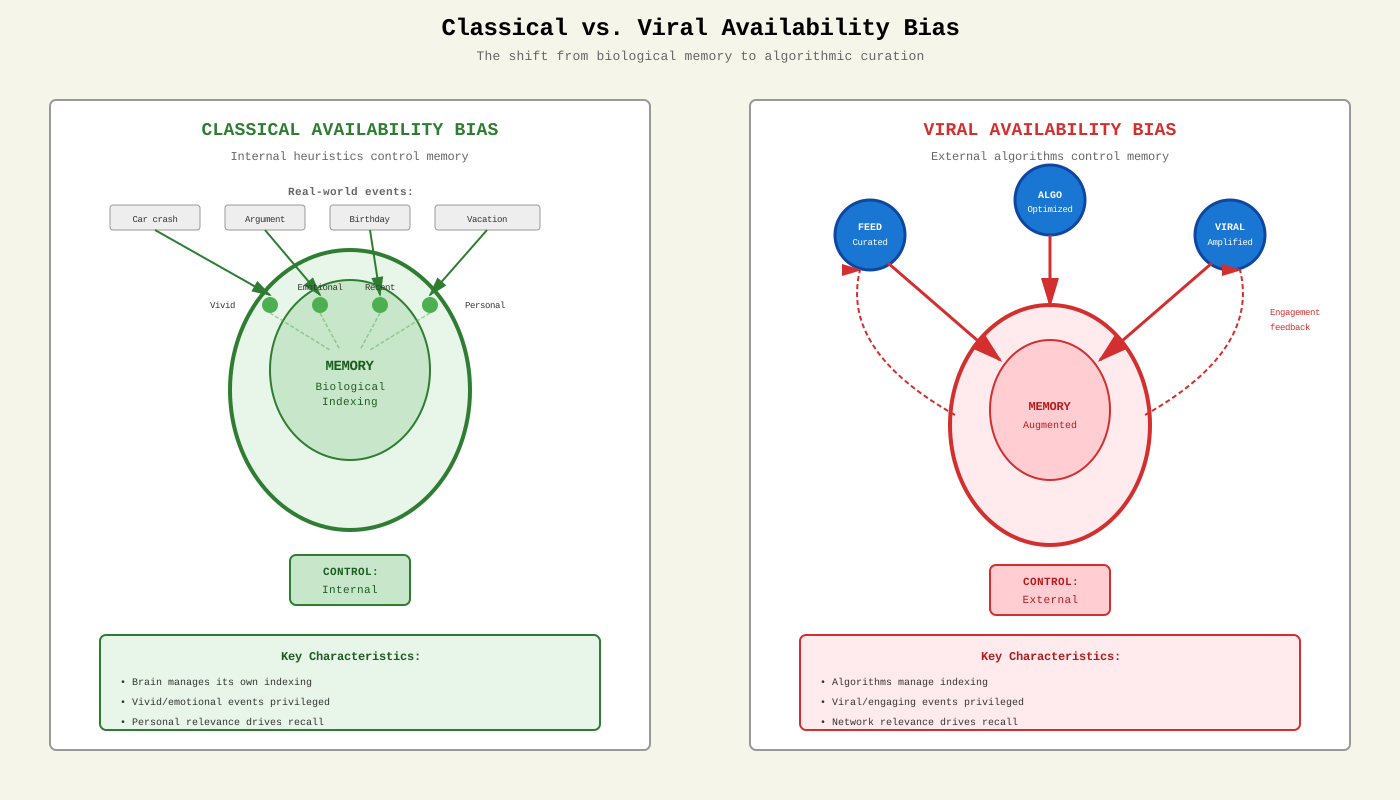
For most of human history, the availability of an idea depended on internal heuristics. You remembered what was vivid, emotional, frightening, or personally relevant. The brain managed its own indexing.
Today, availability operates outside the mind.
Platforms decide which events repeat.
Models decide what resurfaces.
Virality decides what becomes sticky.
The human no longer controls the retrieval function.
The machine does.
This shifts the source of bias from personal memory to algorithmic reinforcement. The memorable and the viral are now different categories. One emerges from cognitive architecture. The other emerges from engagement optimization.
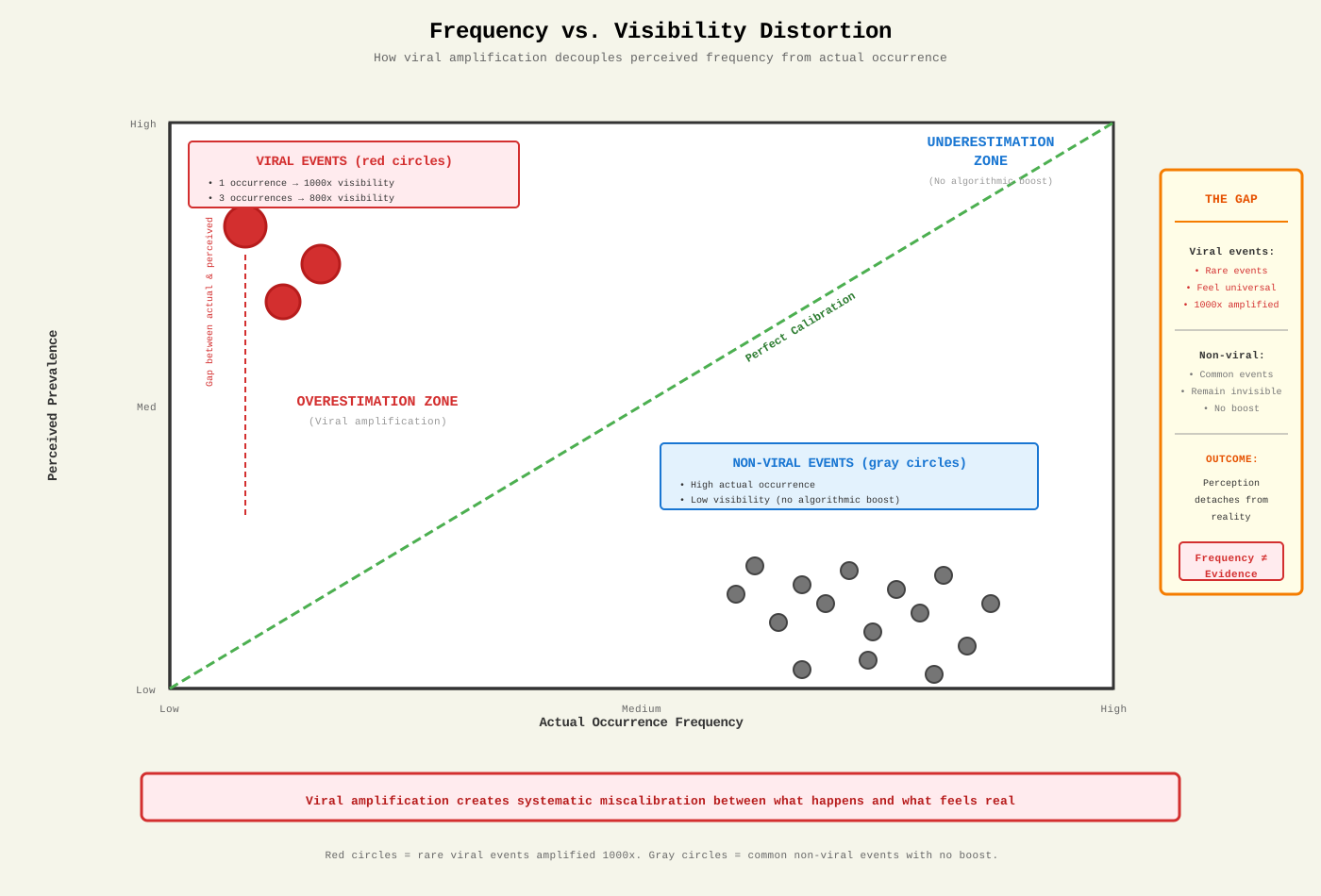
When the world is organized by viral resurfacing, your perception of frequency becomes detached from actual frequency. Something that happened once can feel like it happened everywhere. Something that happened everywhere can feel like it barely occurred.
⸻
2. Frequency Illusions at Scale
Tversky and Kahneman modeled how humans mistake ease of recall for likelihood. A single vivid anecdote outweighs dry statistics. A recent event feels more probable than a distant one.
But in the modern environment, the "vivid anecdote" is engineered.
It is resurfaced repeatedly.
It is remixed, clipped, amplified, and algorithmically resurfaced.
It becomes an artificial superstimulus for the availability machinery.
The result is a frequency illusion operating at industrial scale.
Events that trend appear ubiquitous.
Events that do not trend might as well not exist.
Entire domains of reality become cognitively unindexed.
This distortion is not accidental.
It is a byproduct of a system that optimizes for repetition rather than representation.
⸻
3. AI as a Frequency Multiplier
Large models are trained on the exhaust of the digital world. They absorb patterns that have already been magnified by virality. They reflect those patterns back in conversation, summaries, and generated content.
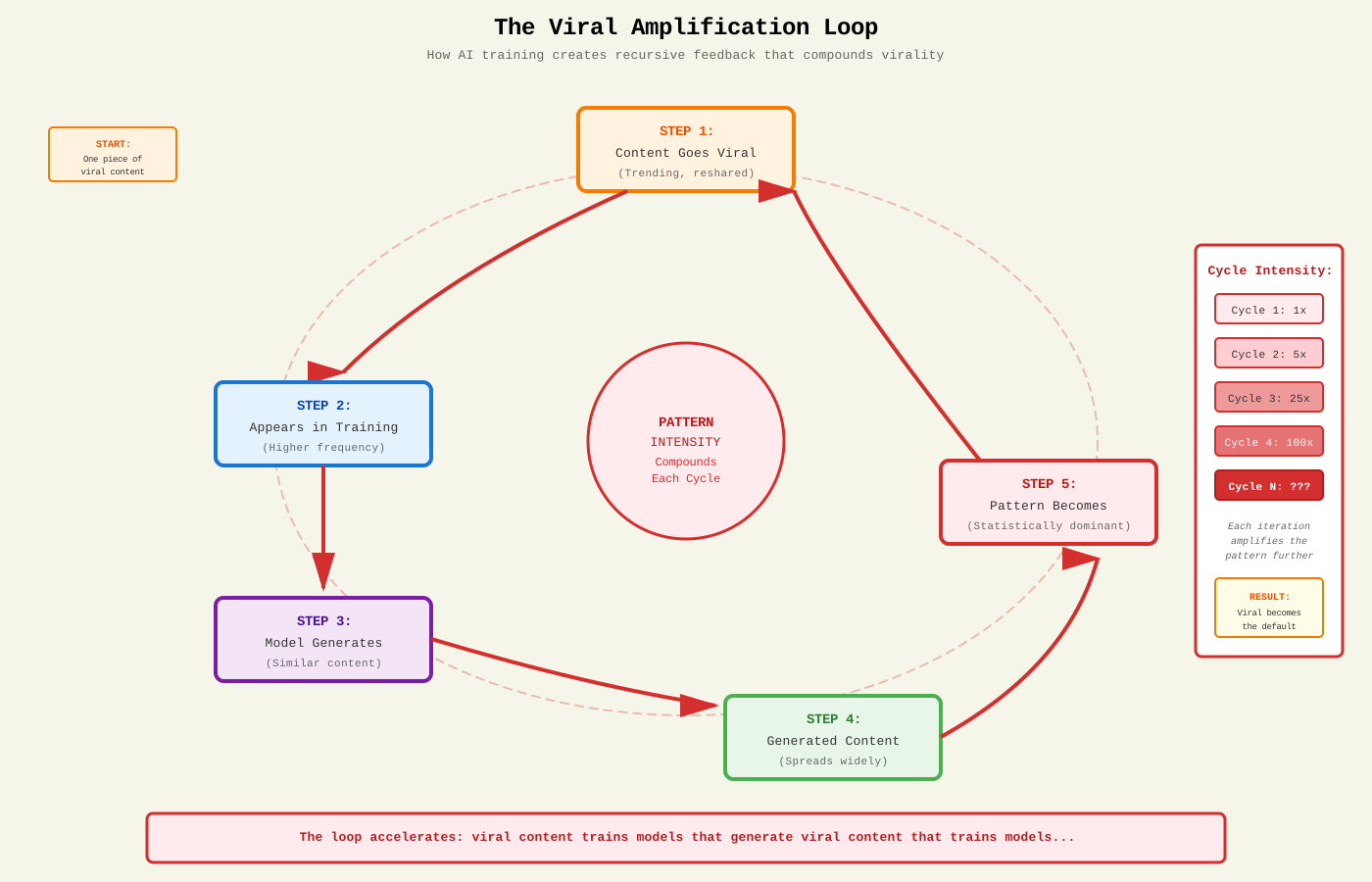
This creates a recursive loop:
- A piece of content goes viral.
- It appears frequently in model training data.
- The model generates similar content.
- The generated content spreads.
- The pattern becomes even more statistically dominant.
The viral becomes the probable.
The probable becomes the default.
The default becomes the assumed reality.
This is the new availability bias.
It is not a cognitive glitch.
It is a statistical artifact of the training distribution.
⸻
4. The Illusion of Representativeness
Classical availability bias made rare events feel common.
Modern availability bias makes rare events feel universal.
When the same clip is re-uploaded a thousand times, it feels like a societal trend.
When a single argument is propagated across every platform, it feels like consensus.
When a fringe idea finds a small but intense audience, it feels like a movement.
Representativeness becomes detached from base rates.
Models and humans both confuse virality with typicality.
This is a subtle but critical shift.
It does not simply distort what we think.
It distorts what we think others think.
And once we believe others believe something, it becomes real in behavior even if it was never real in statistics.
⸻
5. The Cognitive Cost of Viral Evidence
Humans evolved to trust repeated cues.
Repetition meant environmental stability.
Repetition meant survival.
In a world where repetition is engineered, this instinct becomes a liability.
The brain treats viral resurfacing as ecological truth.
The network treats ecological truth as irrelevant.
This divergence creates three predictable effects:
- Overestimation of threats based on highly repeated anecdotes.
- Miscalibration of norms based on highly shared opinions.
- Distorted forecasting based on trends manufactured by feedback, not by reality.
The human mind was built for natural repetition.
It is not adapted to artificial repetition.
⸻
6. How to Resist the Bias
A Tversky approach to modern cognition would not focus on warning labels or digital hygiene. It would focus on reengineering the retrieval function itself.
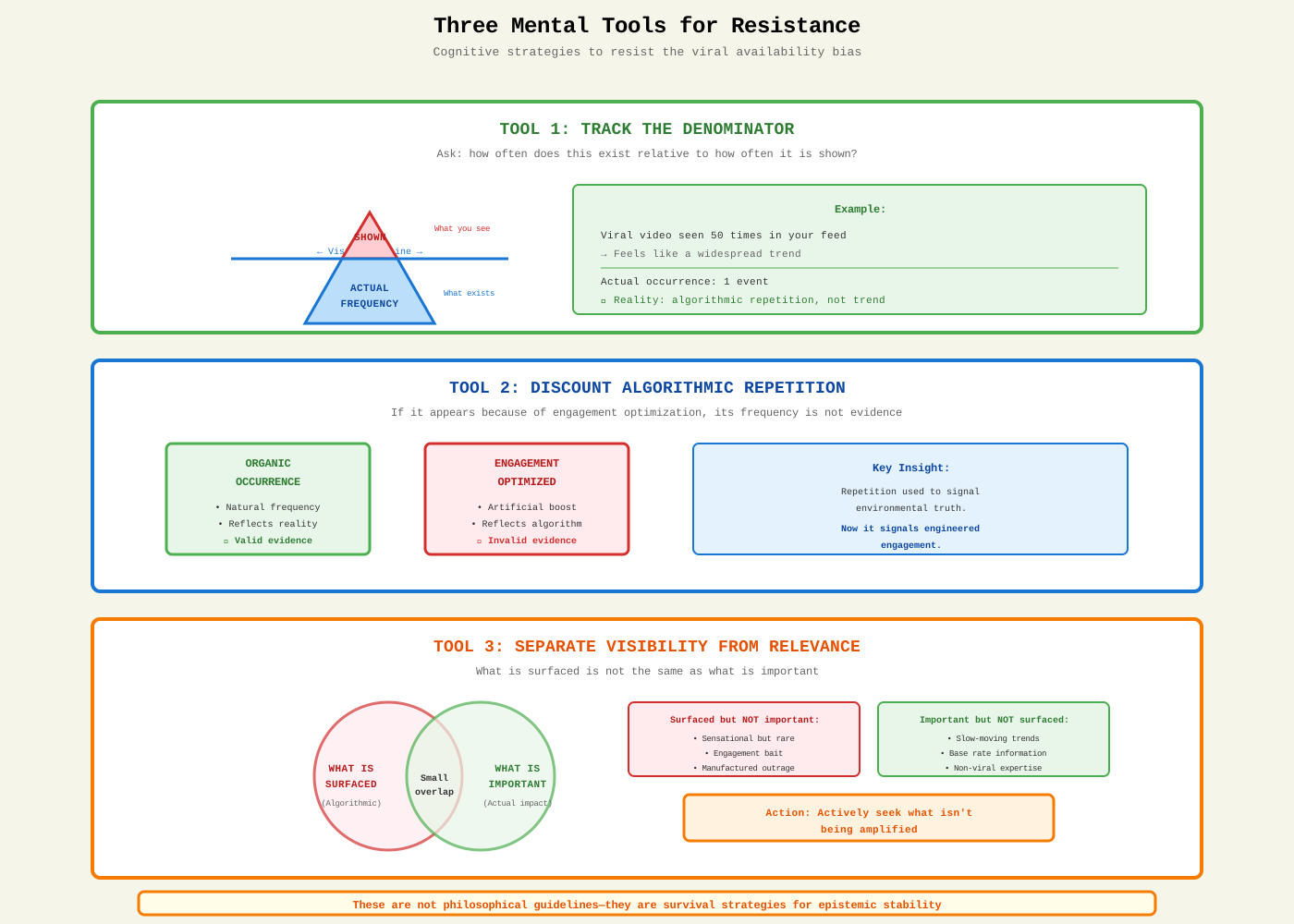
Three mental tools become essential:
1. Track the denominator
Whenever something appears frequently, ask how often it exists relative to how often it is shown.
2. Discount algorithmic repetition
If something appears because it is optimized for engagement, its frequency is not evidence.
3. Separate visibility from relevance
What is surfaced is not the same as what is important.
These are not philosophical guidelines.
They are survival strategies for epistemic stability.
⸻
7. Viral Evidence and the Future of Reasoning
The new availability bias operates as a network-level distortion that changes what counts as evidence, distinct from the individual cognitive distortion humans have always experienced. Viral evidence creates a world where the loudest patterns overshadow the real ones.
If classical availability shaped fear and memory,
modern availability shapes reality itself.
We must recognize that evidence now has two categories:
- Evidence that describes the world
- Evidence that describes the network reflecting the world
Failing to distinguish the two leads to systematic errors in judgment, prediction, trust, and collective decision making.
⸻
Closing Thought
The availability bias was once an artifact of human memory.
Today it is an artifact of algorithmic resurfacing.
The mind has not changed.
The environment that feeds the mind has.
Understanding this new availability bias becomes a prerequisite for navigating a world where repetition signals virality rather than truth. And where the measure of what feels real is shaped by systems that do not know the difference.