Modern medicine often assumes proximity: to a hospital, a specialist, a scanner. But most of the world lives at a distance. Diseases of the gut, waterborne pathogens, environmental exposures, these don't wait for a referral. They move through families and communities while diagnostics remain centralized and episodic.
Frizzle Bioinformatics begins with a simple provocation: if the microbiome is a first-order driver of human and environmental health, then the instrument for reading it should be as common as a thermometer. In our design, that instrument is not one thing but a pair: an ingestible capsule that maps the human gastrointestinal tract in vivo, and a wall-mounted environmental sampler that profiles the microbial "weather" of homes, clinics, schools, and transit. Together, they form a dual platform that establishes microbiome sensing as essential infrastructure.
This post lays out why we're building it, what it aspires to do for low-resource settings, and how we think it can alter the economics and ethics of global health.
I. The Gap Frizzle Is Meant to Close
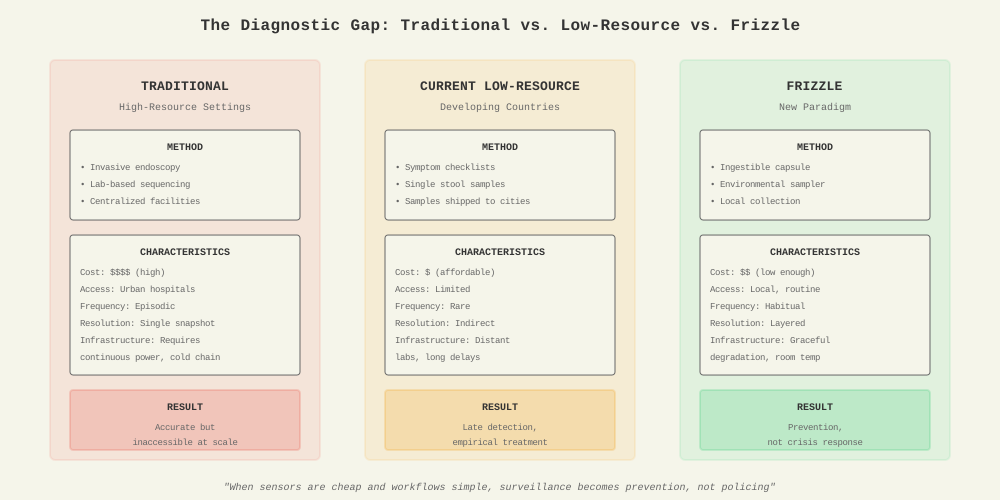
Most GI and infectious-disease diagnostics today are either invasive (endoscopy), indirect (symptom checklists, single stool samples), or inaccessible (sequencing sent to distant labs). The result is predictable: late detection, empirical treatment, and preventable complications. Meanwhile, the built environment (air quality, surfaces, crowding) quietly shapes exposure, but we lack longitudinal, place-based data to act on.
Frizzle's premise is that frequent, local, and layered measurements change the game: you measure the person and their place, with enough temporal resolution to see trends before crises. When sensors are cheap and workflows are simple, surveillance becomes prevention, not policing.
II. What the Device Is (and Isn't)
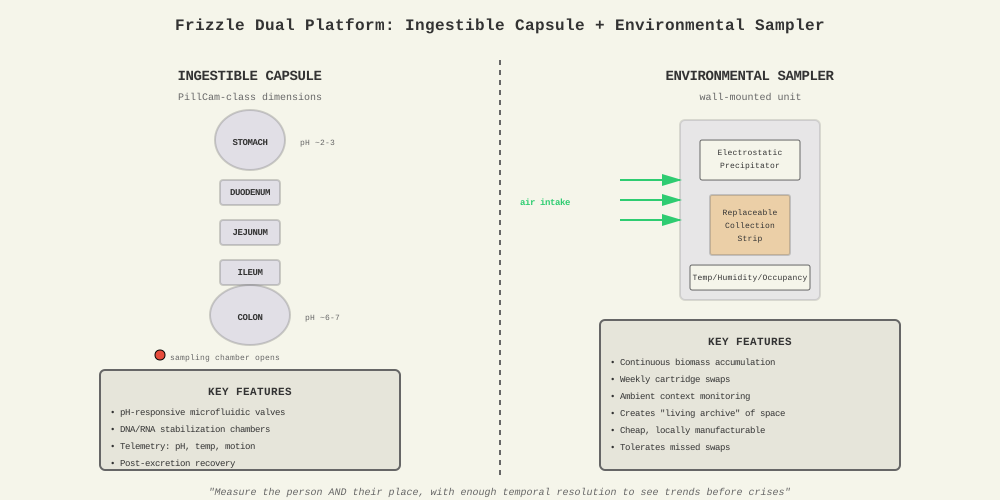
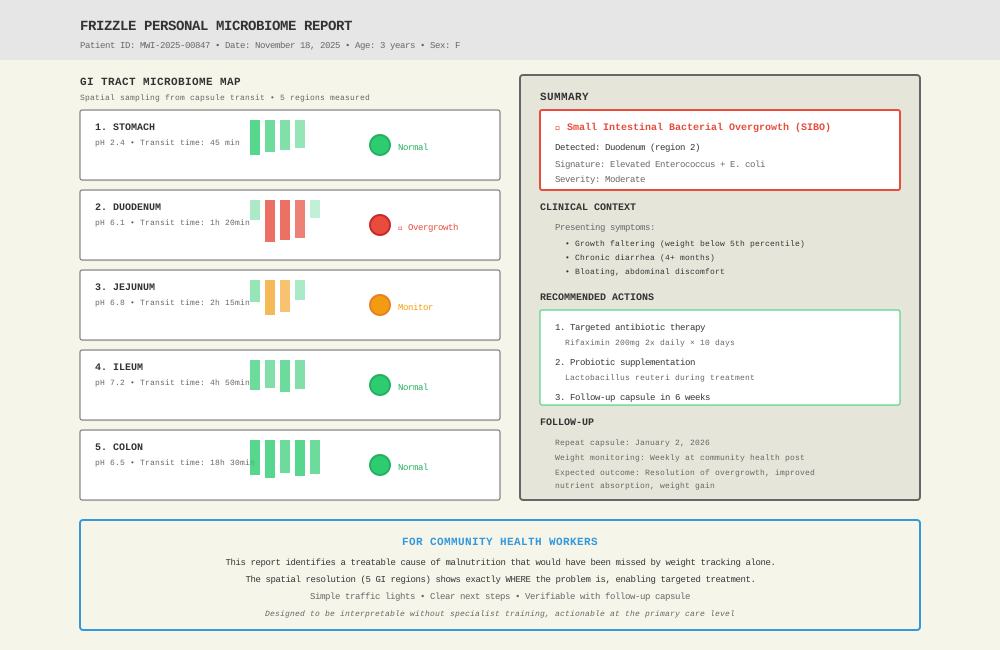
The ingestible capsule (PillCam-class dimensions) is designed to sample specific regions of the GI tract as it travels, using pH-responsive microfluidic valves to open small chambers at the stomach, duodenum, jejunum, ileum, and colon. Each chamber stabilizes DNA/RNA immediately, preserving the "who" and "how many" of local microbes for post-excretion recovery and sequencing. Telemetry (pH, temperature, motion) time-stamps the journey so samples are spatially grounded rather than guessed. The target bill of materials is low enough to imagine use beyond specialty clinics.
The environmental unit mounts like an air-quality monitor. It draws room air through an electrostatic precipitator onto a replaceable strip, accumulates biomass over days, and pairs that with ambient context (temp, humidity, occupancy proxy). Weekly cartridge swaps create a living archive of a home, ward, or classroom.
The system structures reality so that simple local operations (collect, preserve, batch) feed into a cloud or regional analysis pipeline that returns actionable signals: risk scores, trend alerts, environmental advisories.
III. Why This Matters for Developing Countries
1) Diagnostics That Respect Logistics
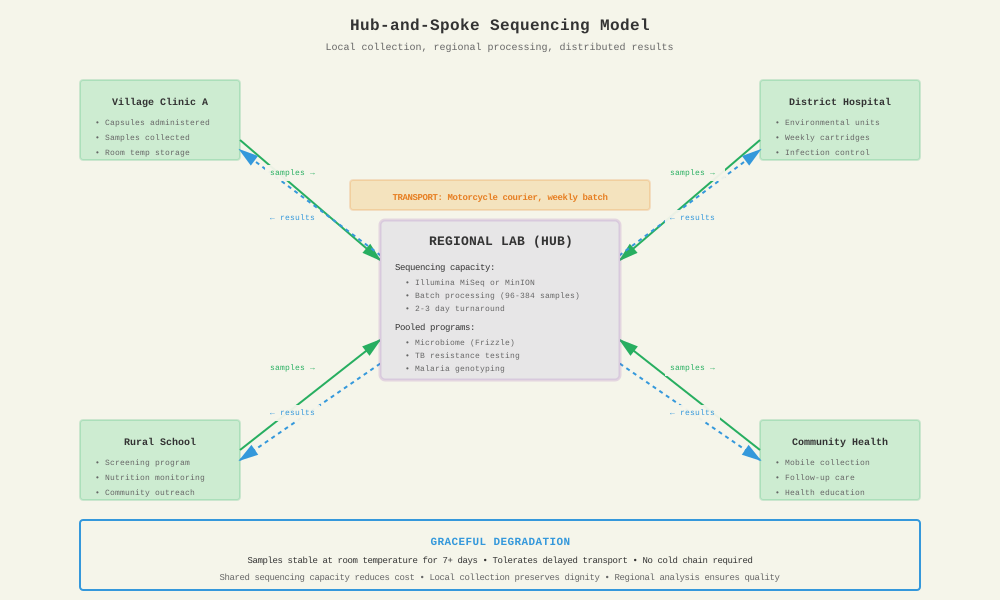
A test that depends on continuous power, refrigerated chain, and tertiary labs will fail where it's needed most. Frizzle is designed around graceful degradation: the capsule stabilizes nucleic acids for days at room temperature; the environmental sampler accumulates slowly and tolerates missed swaps. Collection can be local; sequencing can be hub-and-spoke or pooled with other programs (TB, malaria labs, wastewater surveillance).
2) Population-Level Prevention with Personal Dignity
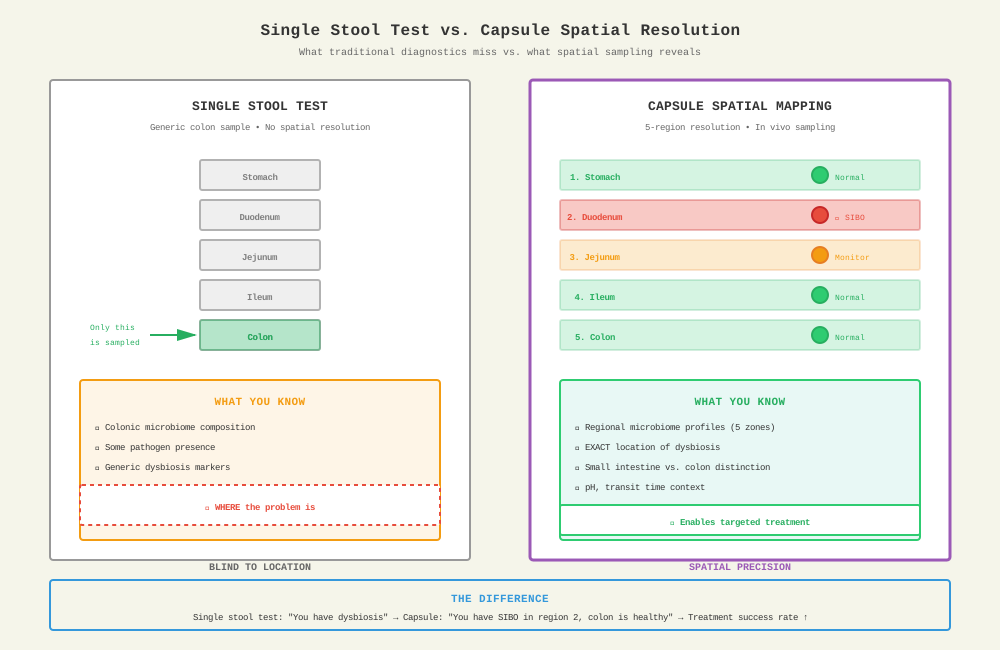
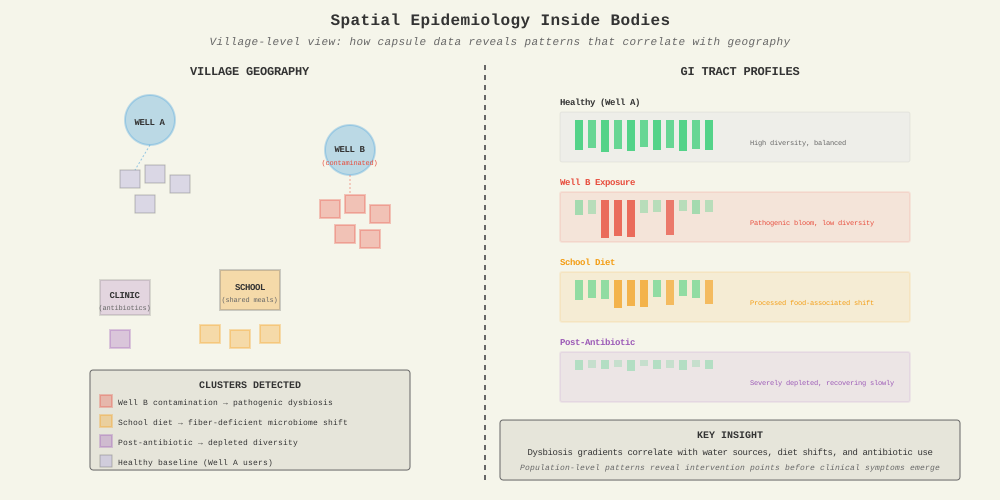
Because the capsule attaches location and time to each sample, it can reveal gradients of dysbiosis that single stool tests miss (e.g., small intestinal overgrowth vs. colonic signatures). Multiply that across a village and you can see spatial epidemiology inside bodies: clusters that correlate with water sources, diet shifts, antibiotics, or school terms. Interventions become targeted (chlorination here, deworming there, diet guidance for subgroups) without resorting to blunt, one-size programs.
3) A "First Instrument" for Clinical Practice
For rural clinicians, the capsule offers an upgrade path: start with basic GI mapping and symptom diaries; grow into pathogen detection, inflammatory indices, and therapy monitoring. The environmental unit lets clinics evaluate their own infection control with evidence, not inspection day theatre.
IV. Hypothetical Use Cases That Could Be Real Within Reach
- Enteric disease early warning. Seasonal increases in specific taxa or virulence genes on home units trigger community hygiene campaigns weeks before diarrheal admissions spike. Capsule data confirms human colonization patterns, closing the loop.
- SIBO and malnutrition. In children with growth faltering, capsules reveal small-bowel overgrowth signatures distinct from colonic flora. Community health workers pair targeted antibiotics or pre/probiotics with follow-up capsules to verify resolution rather than guessing via weight alone.
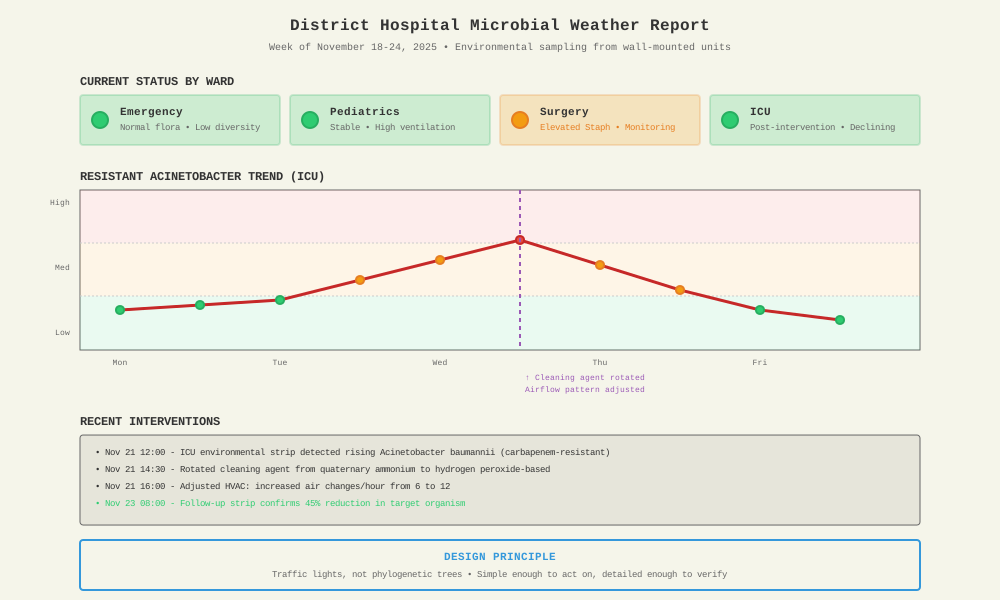
- Hospital "microbial weather" dashboards. In a district hospital, ward-level environmental strips show rising abundance of a resistant Acinetobacter lineage. The facility rotates cleaning agents and airflow patterns; strips confirm decline. The dashboard is simple: a traffic light, not a phylogenetic tree.
- Climate and food transitions. As staple crops shift with climate, environmental units record new fungal loads in markets; capsules detect altered bile-acid metabolizers in adults. Public nutrition programs adapt menus preemptively instead of reacting to a wave of GI complaints.
These scenarios become achievable when instruments are priced and packaged for routine use.
V. Design Ethics: Trust, Consent, and the Right Scale
If microbiome sensing becomes ubiquitous, so can misuse. Our stance:
- Provenance and consent are first-class. Every artifact (human or environmental) is cryptographically signed; chain of custody is simple enough to explain and verify. Opt-in means reversible. Data can be local-first by default, with delayed sync where networks are costly or unsafe.
- Algorithmic humility. Models return risk and trends, not categorical destinies. Where clinical stakes are high, results flag referral, not replace it. False positives should waste time, not dignity; false negatives should be statistically rare and reviewable.
- Data sovereignty. Communities should own their aggregates. Regional labs become trusts, they set sharing terms with universities, NGOs, or pharma, with reciprocal benefits: capacity building, reagent subsidies, co-authorship.
- Right-sizing. We resist the pathology of dashboards. Frontline users see only what they can act on. Raw data stays exportable for researchers without cluttering clinical focus.
VI. A New Economics of Sensing
A single endoscopy suite can cost more than equipping an entire district with Frizzle devices and a modest sequencing contract. The bet is that shifting one percent of imaging budgets into habitual microbiome sensing will save multiples downstream: fewer empiric antibiotics, earlier treatment, faster outbreak response, smarter nutrition and sanitation programs.
Critically, we aim to decouple unit economics from high-margin consumables. The environmental cartridge is cheap and locally manufacturable; the capsule is single-use but engineered for commodity components. What scales the impact is tests per person per year: enough frequency to turn health into a time series.
VII. What Success Looks Like
- A Ministry of Health runs a national microbiome sentinel network by piggybacking on existing primary-care visits and school screenings. Outbreaks are detected by microbial drift before admissions climb.
- Pediatric malnutrition clinics incorporate capsule-guided protocols; growth improves not by generic supplementation but by resolving specific small-bowel dysbioses measured directly.
- Hospitals publish public "microbial weather" reports, boring, because they rarely spike. The spikes that do appear are small and brief, because feedback loops are tight.
- Local universities teach with real community data. Students learn bioinformatics by helping clean their own dataset. A generation grows up thinking of microbiome sensing like vaccination: communal, routine, non-exotic.
VIII. The Deeper Reason to Build This
At heart, Frizzle is about proximity. The closer measurement is to the life it describes, the more humane our medicine becomes. Bodies should not have to travel to big machines to be believed. Places should not need a grant to be seen.
And it is about continuity. Health is not an event; it is a curve. When you can see the curve (of a child gaining weight after resolving SIBO, of a ward quieting after a cleaning change, of a neighborhood's air clearing after a water fix) you begin to replace fear with feedback. You begin to cultivate not only cures, but confidence.
We are building Frizzle because the world needs instruments that honor both truths.
IX. What's Next
We will publish the open schema for artifacts, the bill of materials for the environmental unit, and a reference pipeline that runs on modest hardware. We will pursue pilots that trade glamor for learning: district hospitals over flagship centers, rural schools over conferences.
If this works, it'll be because communities decided that knowing is a public good worth repeating, and because the devices were humble enough to fit the work.
The technology is ready to become routine. Done with care, the impact could transform global health.