For most of the last century, national power ran on a few obvious inputs: oil, steel, shipping lanes, nuclear capability. You could point to maps, pipelines, refineries, and say, this is where influence comes from.
Today a new resource is quietly taking that role: compute.
High end chips, advanced fabs, hyperscale data centers, and the power grids that feed them are turning into strategic assets in the same way oil fields once were. Countries are no longer asking only, "Do we have energy and ports" but also, "Do we have enough compute, and who controls it"
This extends beyond faster websites or cooler apps to encompass who can train frontier models, simulate weapons systems, crack encryption, optimize logistics, and digest oceans of data. In modern AI, compute is leverage.
⸻
1. From Oil Barrels to FLOPs
The older geopolitical story is familiar. Oil shaped alliances, interventions, and trade routes. Supply shocks moved markets and toppled governments. Whoever controlled extraction, refining, and shipping controlled a great deal of what happened next.
Something similar is starting to happen with computation. A simple way to see it is the AI triad described by security analysts: algorithms, data, and computing power. For many state level applications, algorithms and data are diffusing. Compute is the chokepoint.
A country with abundant high end compute can:
- train large models without asking anyone's permission
- run massive simulations for climate, defense, logistics, and biosecurity
- support domestic companies that build on top of these capabilities
A country without it must rent, buy, or beg.
That shift is why you now see headlines about export controls on specific GPUs, multi billion dollar subsidies for chip fabrication, and national strategies for "digital sovereignty." Compute has become visible enough to show up in legislation.
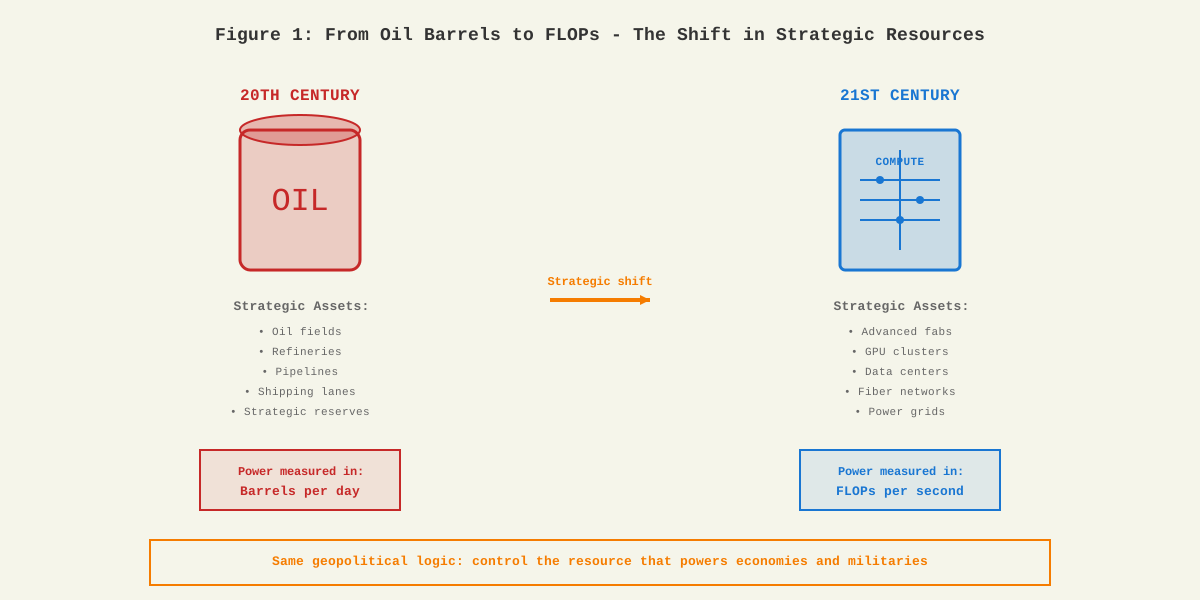
Figure 1: The strategic shift from 20th century oil-based power to 21st century compute-based power. Same geopolitical logic, different resource.
⸻
2. The New Chokepoints
Modern compute rests on a chain of specialized dependencies:
- lithography tools for sub 7 nm processes
- fabs capable of those processes
- advanced memory and packaging
- GPU and accelerator design
- data center buildout and power
The United States still dominates several critical links, especially GPU design and key parts of the semiconductor supply chain. The 2022 CHIPS and Science Act put roughly 52 billion dollars into domestic semiconductor manufacturing and research, while also restricting recipients from expanding advanced fabs in China.
In parallel, U.S. export controls have tried to limit China's access to leading edge AI chips from firms like Nvidia by restricting sales of A100, H100 and their follow-ons, plus controlling access to advanced lithography tools.
Europe, watching this, has moved to reduce dependence on foreign providers with its own Chips Act and broader digital sovereignty efforts, including projects like Gaia-X for European cloud and data infrastructure.
The pattern is clear:
- chokepoints are identified
- subsidies flow to "friendly" capacity
- restrictions tighten for rivals
This is resource politics, just written in transistor counts and nanometers instead of barrels and BTUs.
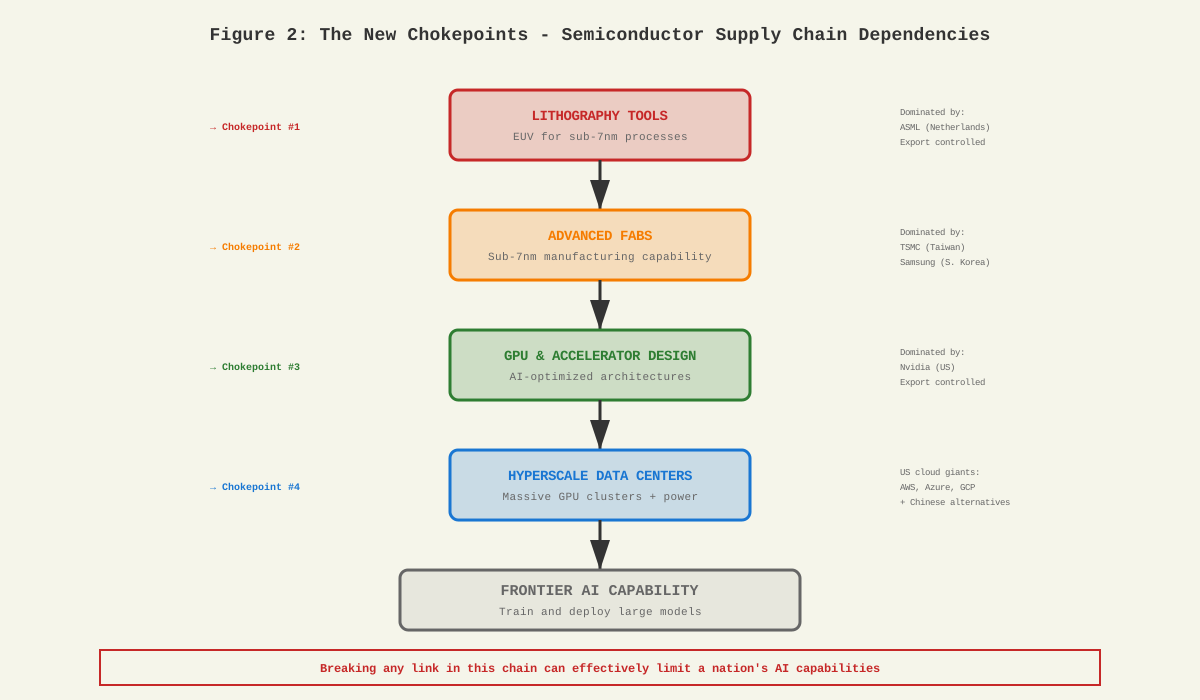
Figure 2: The semiconductor supply chain showing four critical chokepoints. Breaking any link can effectively limit a nation's AI capabilities.
⸻
3. Compute as National Strategy
Once you think of compute as a strategic resource, several behaviors make more sense.
1. Export controls become foreign policy tools
- Limit an adversary's access to cutting edge GPUs.
- Restrict their access to extreme ultraviolet lithography.
- Slow their ability to train world class models and build advanced weapons systems.
2. Subsidies become defensive infrastructure
- Fund domestic fabs so production survives earthquakes, pandemics, and political shocks.
- Encourage chip ecosystems to stay onshore or in allied countries.
3. Data centers become quasi-military assets
- Clusters of AI compute are protected, monitored, and sometimes explicitly tied to national security planning.
- Policies begin to treat certain hyperscale sites as critical infrastructure, similar to ports, pipelines, and power plants.
The geopolitics of compute extends beyond fab ownership to encompass who can pull the levers that slow or accelerate other nations' AI ambitions.
⸻
4. The Map Moves
Oil geopolitics built a familiar map: Middle East producers, U.S. and European multinationals, key shipping lanes and straits.
The map for compute looks different:
- United States as leader in GPU design, leading fabs through allied firms, and many top AI labs.
- East Asia as manufacturing hub, especially Taiwan and South Korea for advanced nodes.
- Europe as a major consumer and regulator, pushing sovereignty through funding and standards rather than pure scale.
- China as a massive market pushing for self sufficiency while under constraint on key tools and chips.
Other regions are trying to avoid being squeezed between two or three major blocs by building their own data center infrastructure and asserting data sovereignty.
This creates a new kind of map.
Instead of proven reserves and shipping routes, you get:
- fab locations
- chip design centers
- large AI data centers and their power contracts
- fiber backbones and undersea cables
These become the "infrastructure of influence."
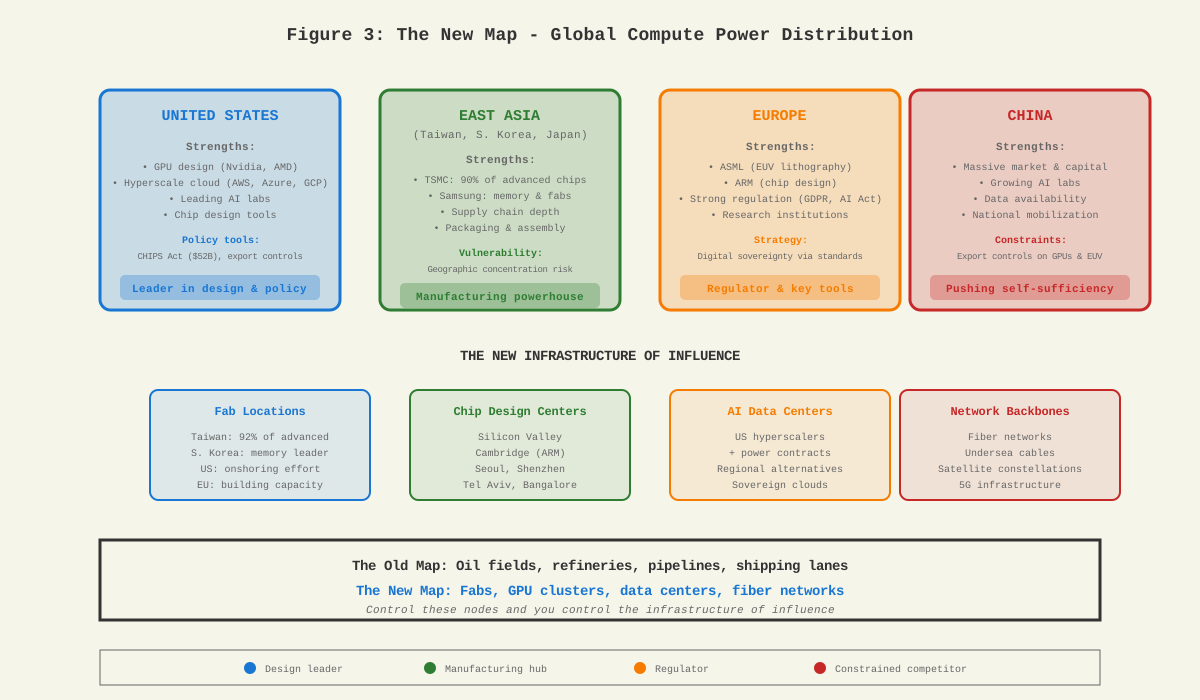
Figure 3: Global compute power distribution across four major players and the new infrastructure that defines influence in the AI age.
⸻
5. The Risk of Compute Nationalism
There is a straightforward national security logic behind all this. If adversaries can use your chips to build systems aimed at you, you might want to slow that down.
The danger is what you might call compute nationalism: a world where countries hoard compute, restrict access, and fragment standards in ways that hurt everyone.
Some possible failure modes:
- research balkanization, where cross border AI projects stall because compute is locked behind national fences
- duplicated investment in redundant capacity, burning resources to build parallel stacks that never interoperate
- widening gaps between countries that can afford leading edge compute and those that cannot, deepening global inequality in scientific and economic capability
AI safety debates often focus on model behavior. The geopolitical layer adds a different concern: the way countries compete over hardware can create race dynamics at the level of infrastructure itself, pushing everyone to move faster than is wise.
⸻
6. Positive Sums and Shared Stacks
None of this is fixed. The fact that compute is a strategic resource does not automatically imply a zero sum future.
There are at least three areas where policy and design choices can make the system more positive sum.
1. Allied stacks and shared capacity
Groups of nations can build shared compute infrastructure with agreed governance, similar to how some countries share satellites, labs, and telescopes. This already appears in early form in European initiatives around shared data and cloud ecosystems.
2. Compute for public goods
There is a huge gap between the compute devoted to commercial goals and the compute devoted to climate modeling, public health, infrastructure optimization, and scientific discovery. National strategies that allocate a portion of subsidized compute to open research and public interest projects can increase global welfare without necessarily eroding security.
3. Edge and physical world intelligence
Not all meaningful intelligence requires hyperscale centers. A lot of value comes from models close to the physical world: on floors, in machines, on vehicles, in clinics. Work like Scanalytics is a reminder that highly local, domain specific compute can improve safety, efficiency, and wellbeing without entering the frontier model arms race.
In this view, geopolitics of compute is partly about how much emphasis nations put on central, frontier training versus distributed, applied intelligence.
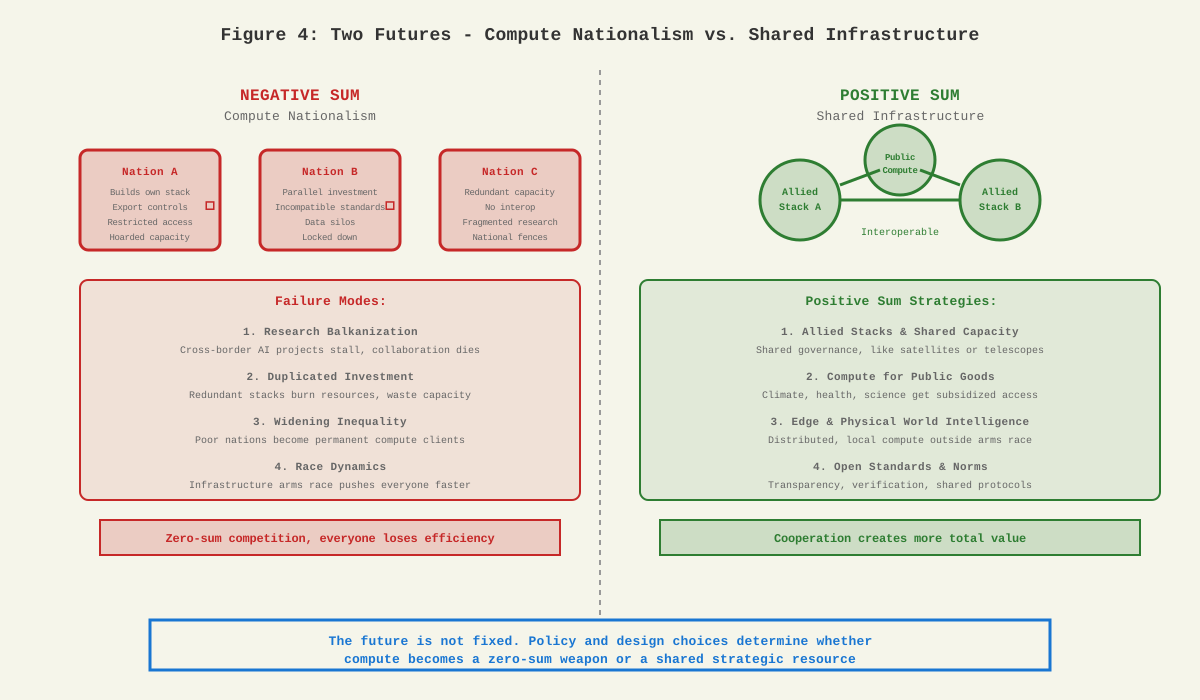
Figure 4: The choice between compute nationalism (fragmented, zero-sum) and shared infrastructure (cooperative, positive-sum). Policy and design choices will determine which path we take.
⸻
7. How This Looks From Inside a Building
From the perspective of a company instrumenting the physical world with sensors and local AI, the geopolitics might feel far away. Chips are components. Compute is an operational constraint, not a diplomatic one.
Yet the links are real:
- supply chain risk for specialized processors
- export control implications when installing high performance systems in certain regions
- availability of domestic or allied fabs for future hardware generations
- policy incentives tied to energy efficiency and local processing
A world in which compute is treated as strategic will shape which sensors are viable, which architectures are attractive, and which markets are stable.
Even very grounded projects, like using pressure sensing floors to optimize energy or detect falls, are downstream of global fights over who makes which chips and where.
⸻
8. Questions We Should Be Asking
If compute is the new strategic resource, the critical questions are not only "who wins" and "who loses" but also:
- How much compute should be considered a national asset rather than a private one
- Which uses of subsidized compute should be mandated to serve public goals
- How to prevent export controls from simply pushing risky development into less transparent jurisdictions
- How to ensure that poorer countries do not become permanent compute clients of richer ones
At a technical level, we will likely see more work on:
- doing more with less compute
- verifying where and how models are trained
- building systems that blend edge and cloud in ways that reduce concentration
At a political level, we will need new norms for sharing, limiting, and accounting for compute, in the same way there are norms for nuclear materials, dual use chemicals, and satellite imagery.
⸻
Closing Thought
The geopolitics of compute is still in its early chapters. Today's export control debates, subsidy races, and sovereignty projects are the first visible signs of a deeper realignment.
Oil shaped the twentieth century because it was the fuel for engines and armies. Compute may shape the twenty first because it is the fuel for models and decisions.
If that is true, then questions about fabs, GPU clusters, and digital sovereignty are not just industry news. They are early signals of how power, safety, and opportunity will be distributed in an AI saturated world.