Attention feels like a simple act. You look at something, think about something, or listen to something, and it becomes the center of experience. Attention functions closer to a force than a spotlight. Wherever it lands, reality becomes more detailed, more structured, more meaningful. Wherever it does not, the world dissolves into background.
Attention is the mechanism by which consciousness chooses a world.
This creates an unusual question. If attention shapes what is real for us, then what is the ontology of attention itself. What is the structure behind this hidden selector that organizes human experience.
⸻
1. Attention as a World Generator
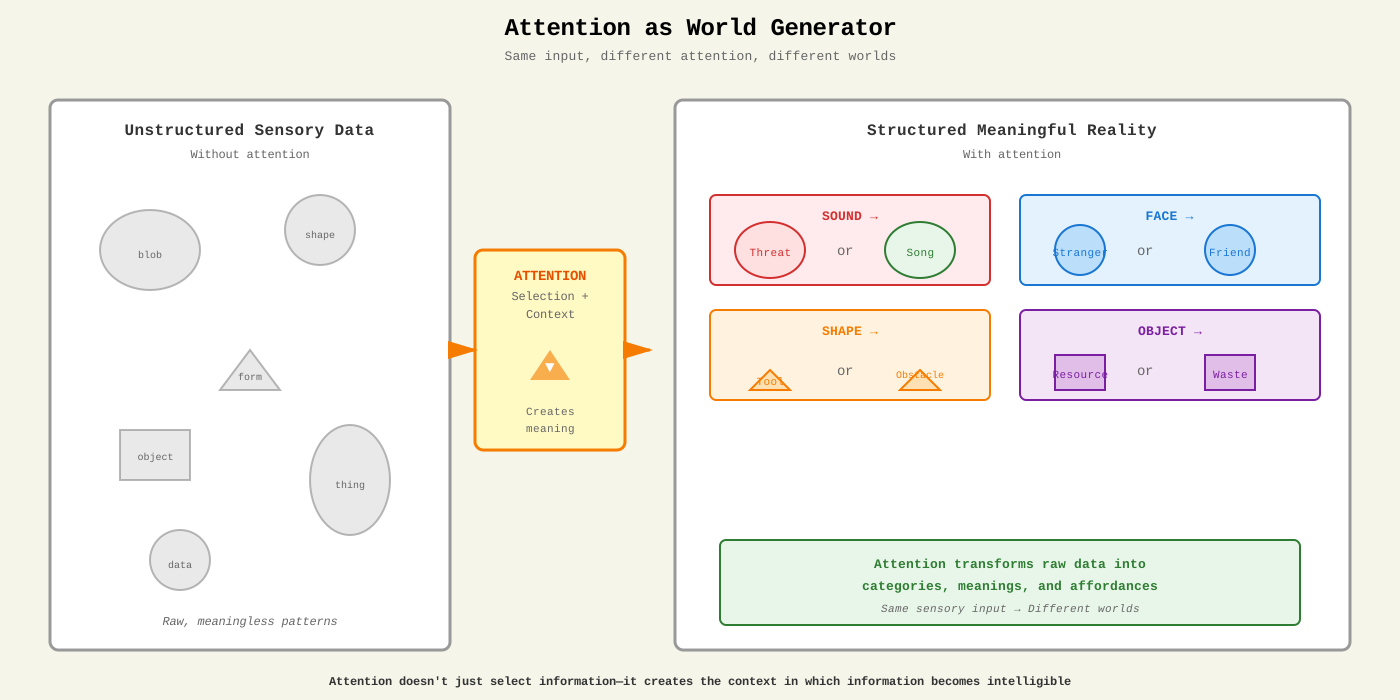
Cognitive science often describes attention as a resource, a limited supply that must be allocated. That is not wrong, but it is incomplete. Attention does not just select information. It creates the context in which information becomes intelligible.
The moment you attend to something, it changes categories.
A sound becomes a threat or a song.
A face becomes a stranger or a friend.
A shape becomes a tool or an obstacle.
Without attention, the world is unstructured sense data.
With attention, it becomes a landscape of meaning.
This is why two people can occupy the same room and inhabit entirely different environments. Their sensory inputs are similar, but their attentional choices construct different worlds.
⸻
2. The Physics of Selection
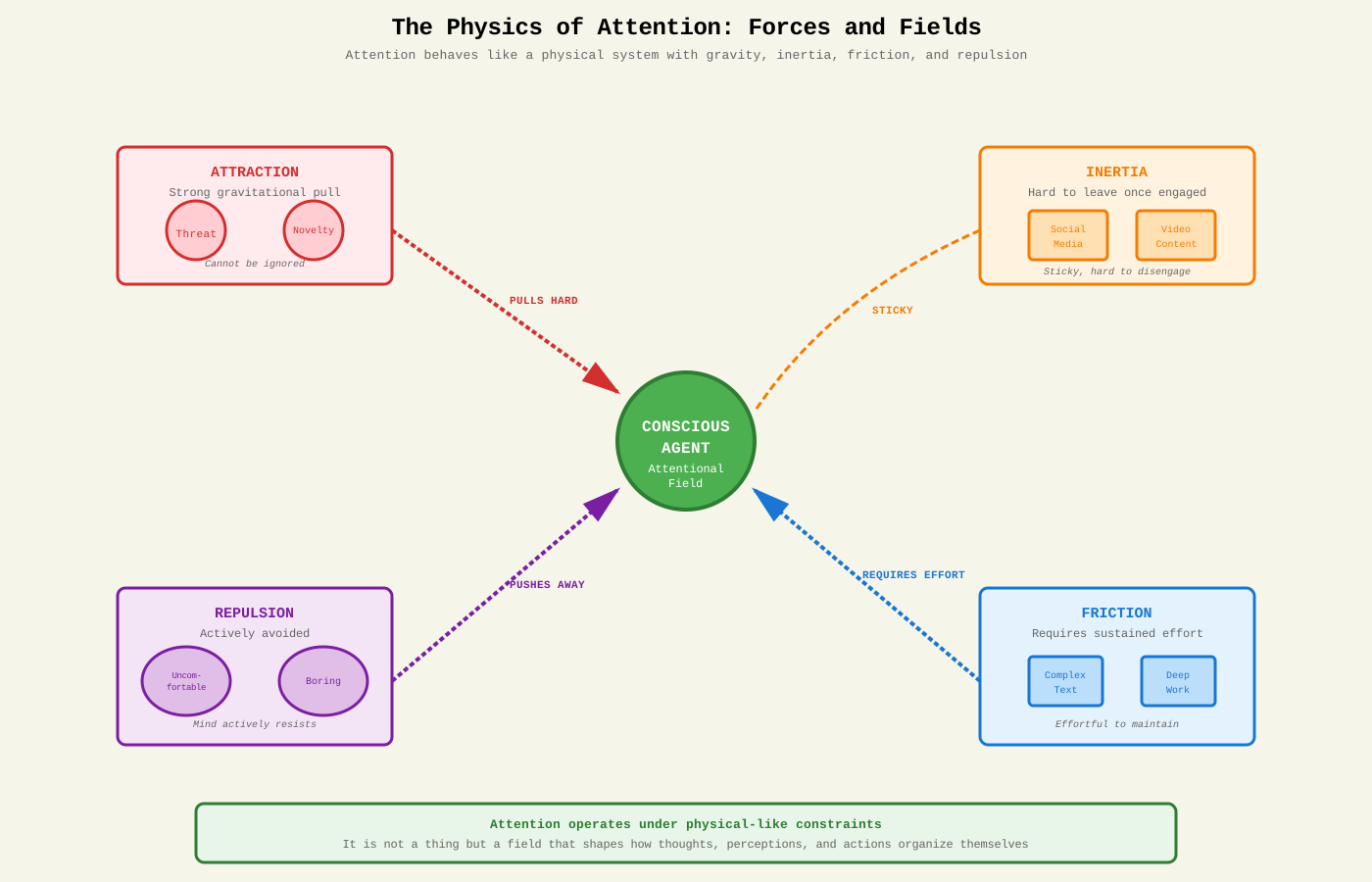
Attention behaves less like a cognitive preference and more like a physical constraint. It has inertia. It has friction. It snaps to some stimuli and avoids others. It can be attracted, repelled, trapped, or freed.
In neuroscience, attention emerges from coordinated activity across frontal and parietal circuits that bias competition in sensory cortices. In computational models, attention behaves like a control signal that alters the gain on specific features.
In subjective experience, it feels like gravity.
Some things pull your mind toward them.
Some things require effort to hold.
Some things cannot be ignored.
The ontology of attention is dynamic. It is not a thing but a field that shapes how thoughts, perceptions, and actions organize themselves.
⸻
3. The Economy of the Mind
Attention is the currency the mind uses to assign value.
What you attend to becomes important.
What you ignore fades into irrelevance.
This is why attention shapes memory.
You remember what was marked as meaningful.
Everything else is discarded as noise.
This economy is efficient but fragile. When technology begins to compete for attention, the internal valuation system becomes distorted. The mind prioritizes what is loudest rather than what is important. The ontology of attention begins to shift toward engineered stimuli.
In a world designed to capture attention, the ability to direct it becomes a form of sovereignty.
⸻
4. AI and the Fragmentation of Attentional Reality
Modern digital systems compete relentlessly for attention. Notifications, feeds, filters, recommendations, and AI-generated content create an environment that constantly pulls the attentional field off its natural trajectory.
This has an ontological consequence.
It fragments reality.
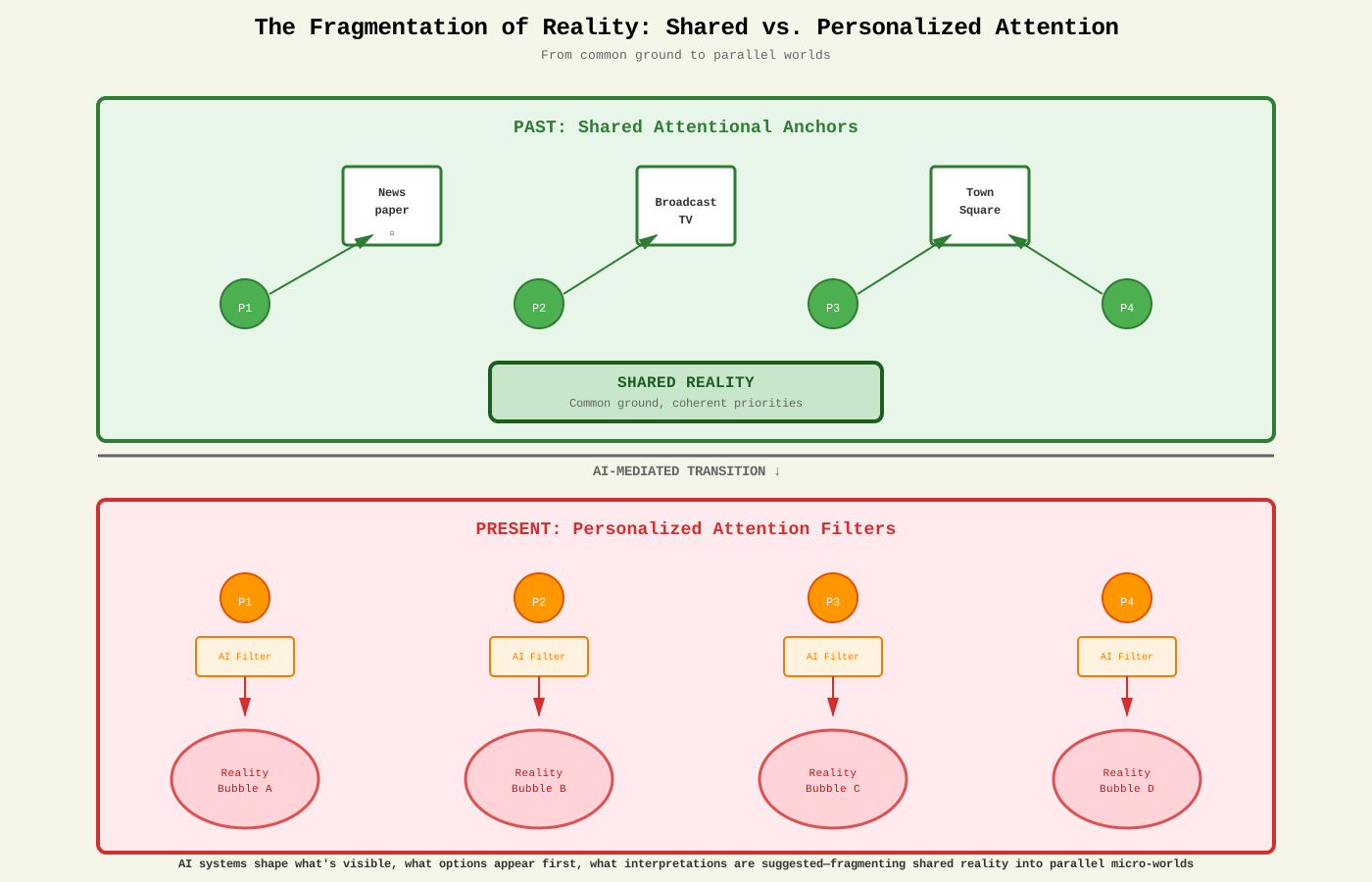
Instead of a stable world that people share, attention carves out micro-worlds that differ from person to person. Two individuals might live in the same city while experiencing entirely different versions of its meaning, risks, and narratives.
AI systems amplify this by shaping what information is visible, what options appear first, what interpretations are suggested, and what pathways are available. They act as external attentional agents. They do not dictate what is real, but they nudge the boundaries of what reality can be.
⸻
5. The Reflective Loop
Attention is not passive. It reflects back onto the agent.
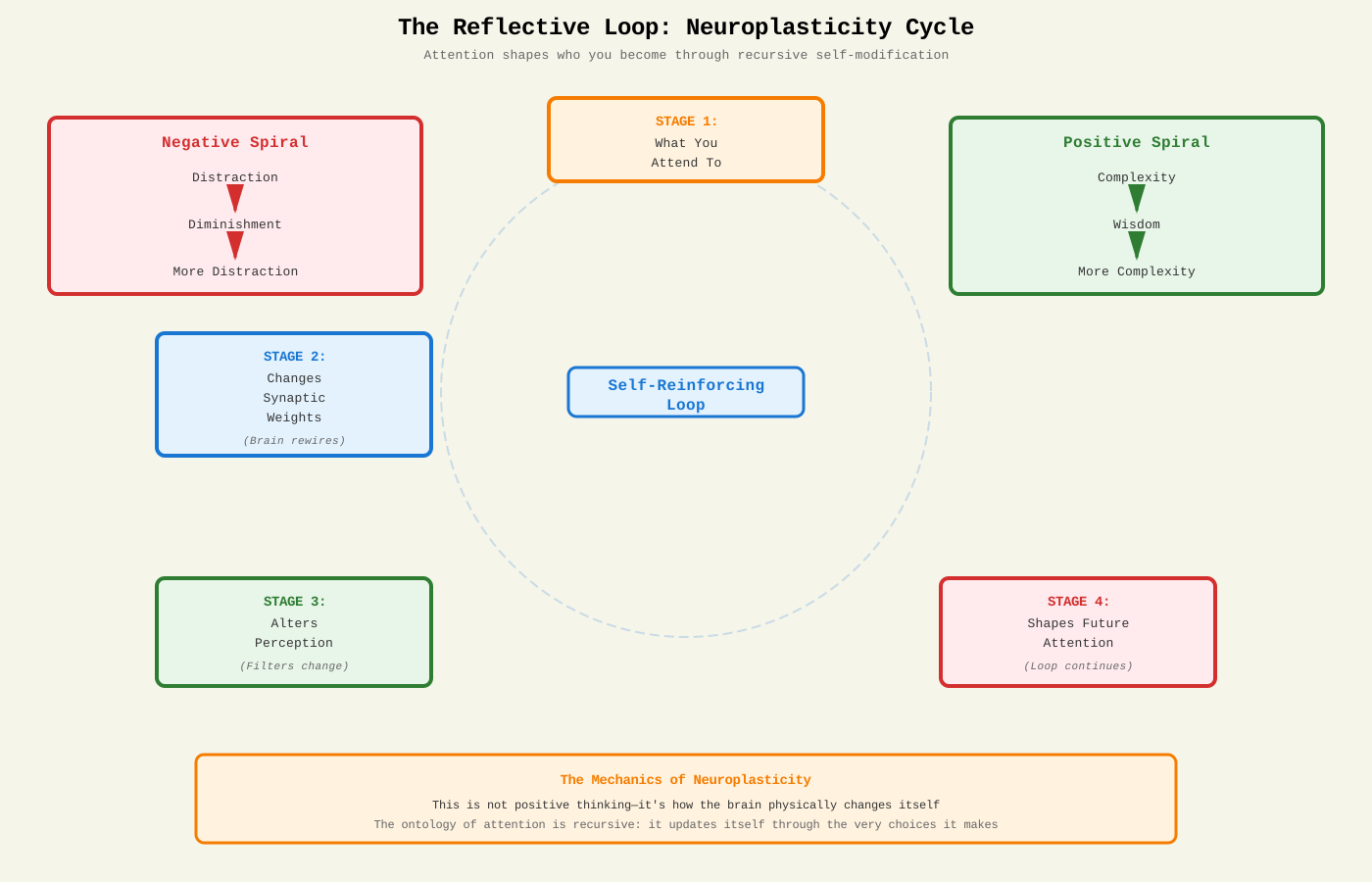
What you attend to shapes who you become.
A person who attends primarily to fear becomes anxious.
A person who attends to opportunity becomes optimistic.
A person who attends to complexity becomes wiser.
A person who attends to distraction becomes diminished.
These are the mechanics of neuroplasticity.
Attention changes synaptic weights.
Synaptic weights change perception.
Perception changes future attention.
The ontology of attention is recursive.
It updates itself through the very choices it makes.
⸻
6. Shared Attention and the Construction of Culture
Culture is built from shared attention.
A society that attends to science produces innovation.
A society that attends to conflict produces polarization.
A society that attends to beauty produces art.
A society that attends to risk produces stagnation.
Shared attention defines what a community considers real.
It defines which problems become urgent and which remain invisible.
AI-driven personalization challenges this. When individuals no longer share attentional anchors, common ground weakens. Social reality loses its coherence. Collective priorities drift apart.
Understanding attention becomes essential for understanding the future of civic life.
⸻
7. Mastery as Attentional Skill
The most skilled people in any field share a common trait: they know where to look.
A grandmaster sees a chessboard differently.
A surgeon sees tissue differently.
A musician hears structure that others miss.
Expertise is the selective compression of reality.
It is the ability to attend to the right variables at the right time.
This suggests that the ontology of attention is learnable.
It can be trained, shaped, tuned, and refined.
AI tools will accelerate this.
They will offload cognitive load, highlight patterns, and structure the search space.
Attention will shift from being an unconscious instinct to a deliberate skill.
⸻
Closing Thought
Attention is not simply what the mind looks at.
It is the mechanism that assembles experience into a coherent reality.
The ontology of attention reveals that human experience is not driven by what the world is, but by what the mind chooses within it. As AI systems evolve and begin to participate in this selection process, our inner and outer worlds will be shaped by a new partnership in determining what becomes real.
Where attention goes, reality follows.
What we choose to attend to will determine the future we live in.