Most conversations about intelligent buildings focus on efficiency, risk reduction, or operational analytics. Those matter, but they are not the most transformative impact for architecture and design. The real shift is behavioral. Instrumented environments change how spaces treat people, how people treat each other, and how teams coordinate inside those spaces.
Two ideas help frame this shift.
The first concerns inclusion.
The second concerns cooperation.
Both aim to correct a long-standing bias in design: the assumption of a generic user who behaves like no one in particular.
This draws on a broader understanding from cognitive science: people do not behave like averages. They behave like distributions. And once buildings begin to sense those distributions, design can respond in ways that were impossible when everything relied on memory, anecdotes, and intuition.
Below is a two-part exploration, followed by a unified vision for the future of practice.
⸻
Part One. The Equitable Room
Most design failures come from the same cognitive mistake.
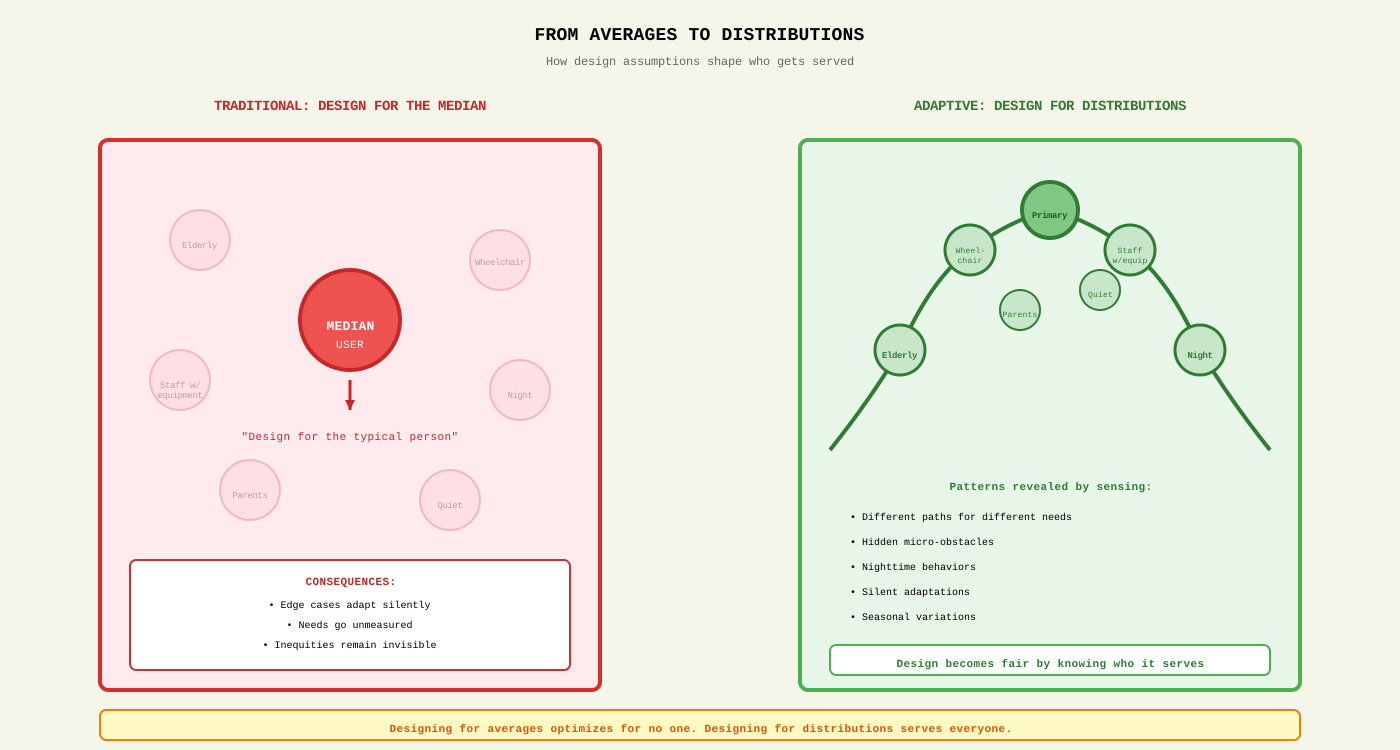
We imagine a typical user, a central tendency, a representative human who will use the space the way the plan assumes. That user does not exist. Real people form clusters, edge cases, outliers, bimodal patterns, seasonal patterns, late-night patterns, and patterns that never show up in post-occupancy surveys because the people affected do not complain. They adapt silently.
Research in human judgment shows that people naturally rely on simplified models because complexity is expensive. Architecture has had to do the same. When you cannot measure real patterns of use, you design for the median. You hope it works for the tails. Often it does not.
Adaptive environments allow something different.
When floors, corridors, entries, stairwells, and shared zones reveal their real use patterns, the hidden clusters start to appear.
You see that:
- the elderly residents take a slightly different path than younger ones
- staff carrying equipment consistently avoid a corridor nobody thought was a problem
- the quietest users gravitate to a corner that seems unlikely on paper
- wheelchair routes have micro-obstacles that were never reported
- the "primary circulation path" is not where circulation actually happens
- nighttime behavior follows a complete second rhythm that daylight design never captured
None of these insights require prediction or identity.
They come from distribution.
The Equitable Room is what emerges when design reflects full distributions instead of fictional averages.
It is not a high-tech room.
It is a room that becomes fair by knowing who it serves.
Adaptive environments do not ask humans to adjust to their limitations.
They adjust to real human variety.
This is inclusion by evidence rather than inclusion by assumption.
And the optimism is straightforward:
When you design for how people truly behave, more people thrive.
⸻
Part Two. The Visibility Dividend
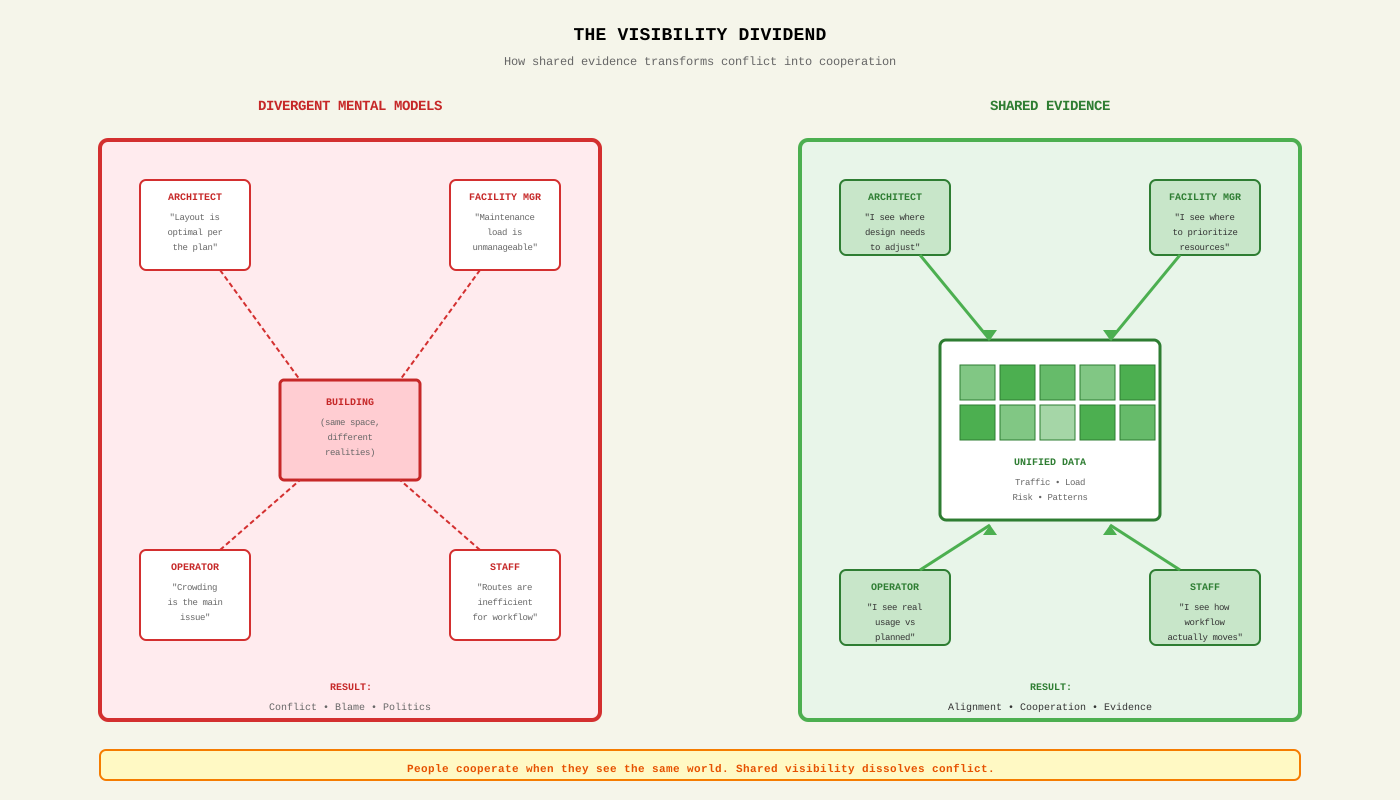
Design projects often run into conflict not because people disagree about goals, but because they disagree about reality. Facility managers, architects, operators, clinicians, tenants, and staff carry different mental models of how a space is being used. Each model is internally coherent.
Many are wrong.
Studies of human disagreement show that many conflicts arise not from intent but from mismatched representations. When different parties see different worlds, coordination collapses.
Instrumented environments make more of the world visible.
Not the personal world of individuals, but the shared world of patterns and load.
When a building shows its own evidence:
- where crowding actually happens
- which routes absorb the most stress
- which areas are chronically underused
- where staff spend most of their day
- how weather affects movement
- when risk spikes
- how maintenance load accumulates
Ambiguity dissolves.
Blame decreases.
Cooperation increases.
This is the Visibility Dividend.
Teams align because they finally share the same reference frame.
Design adjustments become less political and more empirical.
Operational debates become less emotional and more constructive.
Resource allocation becomes less about advocacy and more about evidence.
Shared visibility creates shared responsibility.
And because the evidence is continuous, the collaboration never freezes into a fixed model. The building keeps teaching its stewards how it is being used.
The optimism here is relational.
People cooperate when they see the same world.
⸻
Part Three. A Future Vision for Architecture and Design
Adaptive environments support the people who shape them rather than turning buildings into autonomous systems. Architects and designers gain a new substrate to work with, complementing rather than replacing their expertise.
Several long-term shifts follow from this.
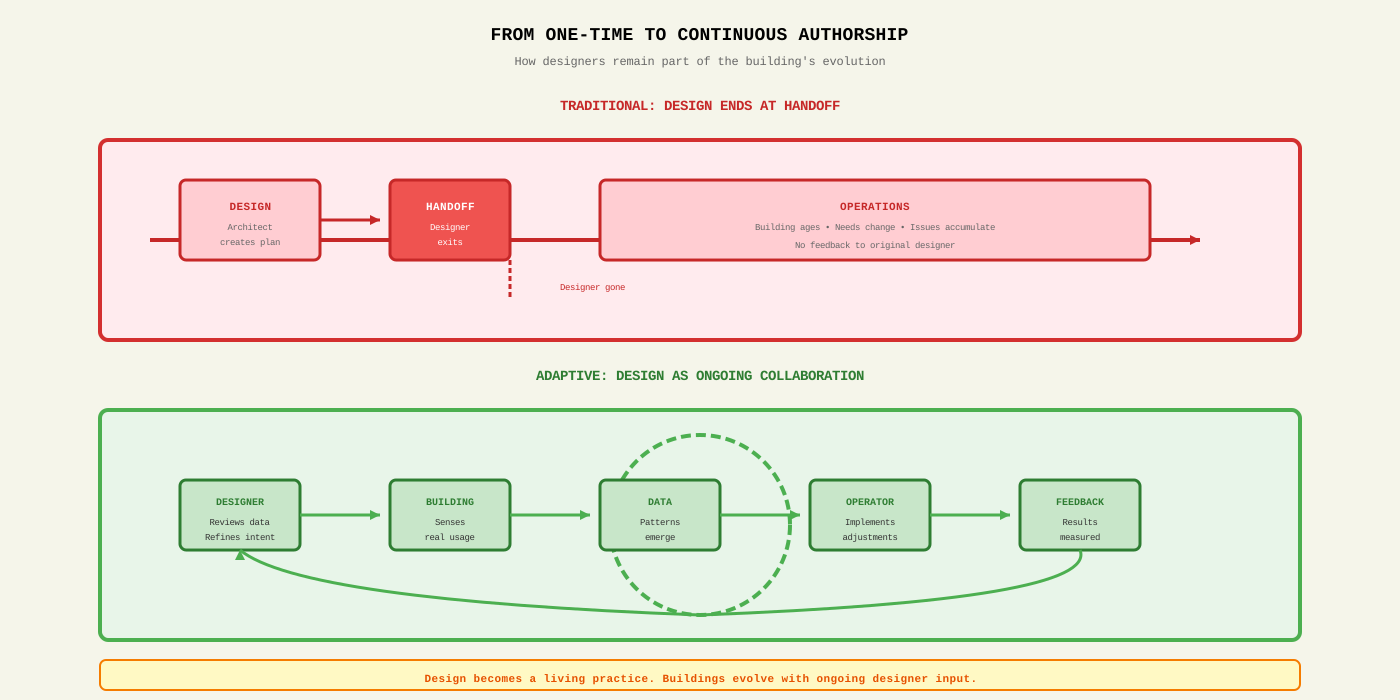
1. From one-time authorship to continuous authorship
Design will no longer be sealed at handoff.
Spaces will behave like ongoing drafts where the designer remains part of the loop.
Adjustments become part of the life of the building rather than rare interventions.
2. From user personas to user distributions
Personas are useful narratives, but they flatten human variance.
Adaptive evidence reveals clusters of experience that never appear in interviews.
Design can finally respond to the subtle and the silent.
3. From built intent to lived reality
Architects and operators will see gaps between planned function and actual usage in high resolution.
Spaces can be nudged, reconfigured, or supported based on what people actually do rather than what they are expected to do.
4. From risk mitigation to proactive care
Hazards surface early.
Wear reveals itself before it becomes dangerous.
Flow irregularities indicate deeper issues.
The building becomes safer because it is monitored not by fear but by curiosity.
5. From neutrality to moral performance
Buildings have always had moral impact, but it was hard to measure.
Who gets slowed down
Who gets excluded
Who gets tired
Who gets unsafe
Now those questions can be answered with patterns instead of anecdotes.

6. From static typologies to adaptive ecologies
Architects will start thinking of buildings the way ecologists think about environments:
dynamic, changing, responding to forces and seasons and populations.
Spaces will feel less like fixed objects and more like responsive companions.
7. From isolated projects to collective intelligence
When many instrumented buildings share lessons, patterns begin to generalize.
Design knowledge compounds.
What one building learns can strengthen the next.
This opens the door to an architectural network effect.
⸻
Closing Thought
Adaptive environments do not make buildings sentient.
They make them honest.
They show how people actually move, cluster, struggle, and thrive within them.
They reveal where intention mismatches reality.
They help teams cooperate.
They allow designers to work with the living patterns of use rather than abstract hopes.
The future is not about smart buildings.
It is about buildings that participate.
The Equitable Room ensures we include the full distribution of people.
The Visibility Dividend ensures we coordinate with shared evidence.
Together, they point toward a built world where responsiveness is normal and flourishing is engineered into the fabric of everyday space.