For months, the headlines have gone back and forth.
AI will take all the jobs.
AI will create new ones.
Everything will change.
Nothing will change.
Workers deserve something more useful than predictions.
The labor market is shifting in recognizable ways. Some tasks are being automated. Some roles are expanding. Some are becoming harder to enter. Others are growing because they rely on judgment, coordination, or physical presence. The middle of work is being rewritten, and workers who understand these shifts can shape their futures rather than react to them.
This guide is written for people on the front lines of the labor market. The logistics workers, medical techs, supervisors, administrative staff, assemblers, warehouse teams, junior technicians, and customer support workers who keep entire industries moving.
Here are the forces reshaping work and the skills that will matter most in the years ahead.
⸻
1. The Work That Survives Is Close to Reality
Jobs that rely on place, presence, or physical skill are becoming more important, not less. AI can process documents at scale, but it cannot:
- lift equipment
- check inventory by hand
- support a patient
- troubleshoot a machine on a noisy floor
- manage a warehouse team
- coordinate shift changes
- inspect a space for safety
- walk a route and see what has changed
Roles that handle real objects, real environments, and real people gain leverage as digital tools spread. When software does more of the screen work, workers who touch the physical world tend to rise in importance.
Workers should look for roles with a real-world interface: tools, machines, people, sensors, spaces.
This includes:
- logistics and warehousing
- manufacturing and assembly
- quality assurance
- facilities and maintenance
- healthcare support
- skilled trades
- hybrid operations roles
These sectors are not shrinking. Many are growing.
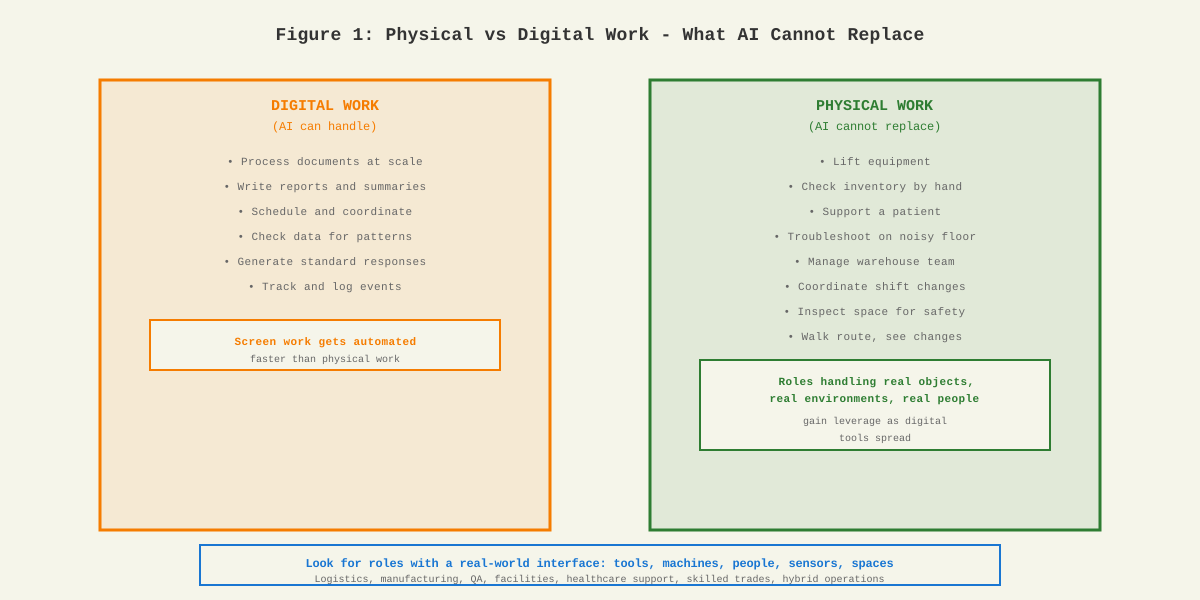
Figure 1: The digital-physical divide. AI excels at processing information but cannot replace work that requires physical presence, judgment in real environments, or coordination with people and objects.
⸻
2. AI Is Becoming a Co-worker, Not a Competitor
Most of the deployment of AI so far takes the form of copilots, assistants, or workflow tools. These tools help with:
- documentation
- scheduling
- summarizing information
- checking inventory or orders
- writing reports
- troubleshooting with step-by-step guidance
- flagging problems early
Workers who can use these tools comfortably gain an advantage. Workers who avoid them lose speed and lose visibility.
Becoming someone who can direct AI systems matters more than becoming an engineer.
A good rule of thumb:
If a tool makes your work faster or safer, learn it before your peers do.
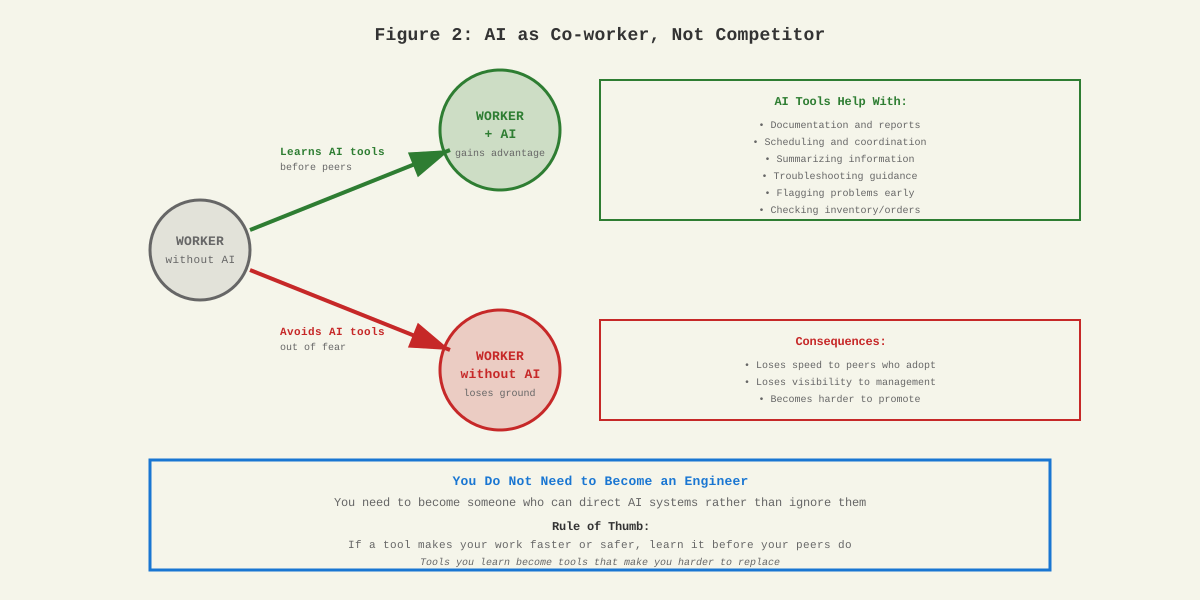
Figure 2: The choice facing workers. Those who learn AI tools gain speed and visibility. Those who avoid them lose ground to peers who adapt faster.
⸻
3. The Most Valuable Workers Live on the Seams
The jobs least likely to disappear fall in the overlap between two worlds:
the world of people and the world of systems.
These workers do things like:
- translate instructions into real action
- catch mistakes that software cannot see
- escalate issues when judgment matters
- coordinate across teams
- interact with customers or patients
- shape workflows so others can succeed
These are roles with titles like:
lead operator, team supervisor, shift coordinator, senior technician, scheduling specialist, QA lead, inventory control, claims coordinator, intake specialist.
These are glue jobs that keep the entire flow of work stable.
AI tools increase the value of glue work because more of the routine tasks are automated, leaving the complex, interpersonal, and situational tasks for humans.
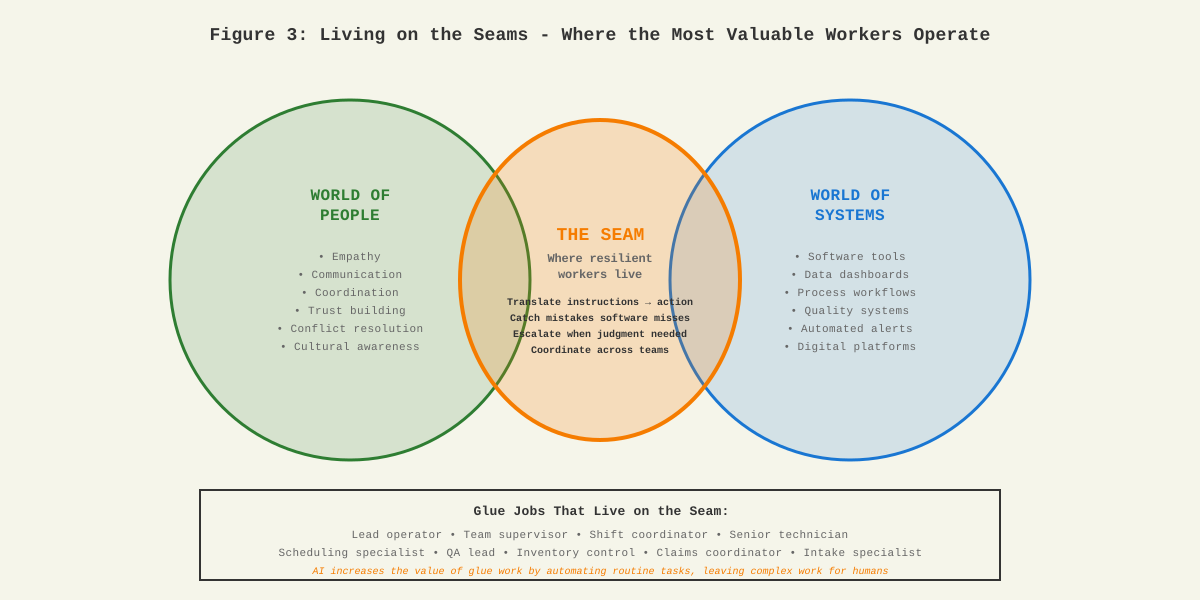
Figure 3: Where resilient workers operate. The most valuable roles sit at the intersection of people skills and systems literacy, translating between human needs and digital workflows.
⸻
4. Career Growth Will Favor People Who Learn the System, Not Just the Task
The next decade will reward workers who understand how their workplace fits together.
Understanding the system matters more than the title:
- how your team interacts with other teams
- how software supports your workflow
- how safety and quality are maintained
- how information moves through the system
- how decisions are actually made
Workers who understand the system become the natural choice for lead, training, QA, or supervisory roles. Workers who focus only on their task risk getting stuck.
Ask yourself once a month:
If someone new joined my team, could I explain how all the parts of our workflow fit together?
If the answer is yes, you are building leadership capital.
⸻
5. The Rise of Sensor-driven Work Creates New Demand for Human Judgment
As more workplaces adopt sensor networks, automated alerts, computer vision, or platforms like the ones my team builds at Scanalytics, the nature of front-line work changes.
Sensors produce information.
People turn that information into action.
This applies in:
- manufacturing
- logistics
- retail
- healthcare
- facility operations
- hospitality
- senior living
- property management
Workers who are comfortable interpreting dashboards, adjusting procedures, or responding to alerts become more valuable as workplaces modernize.
Data makes good workers better. It does not replace them.
⸻
6. What Workers Can Do Right Now
Here are practical steps that help workers stay resilient as the labor market shifts.
- Become the person others trust.
Reliability, punctuality, clear communication, and good attitude still outperform everything else. - Learn one new digital tool every quarter.
Scheduling software, warehouse management systems, AI assistants. Progress compounds. - Stay close to the physical or relational parts of work.
Roles that rely on presence, coordination, or care are more resilient. - Develop range inside your workplace.
Cross training builds security and opens new ladders. - Volunteer for responsibility when something ambiguous needs doing.
Ambiguity is where real value lives. - Do not avoid AI tools out of fear.
Tools that you learn become tools that make you harder to replace. - Think like someone one level above you.
Ask: "How would my supervisor make this decision?" Practice the answer.
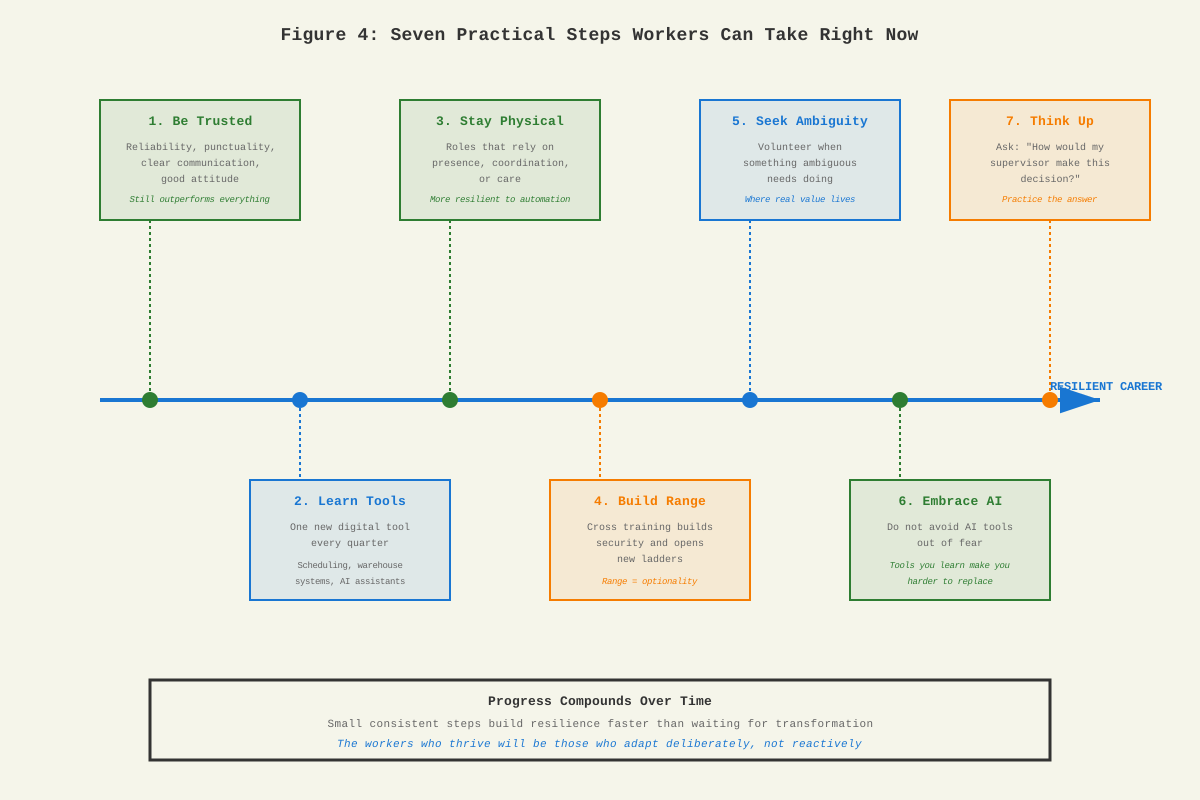
Figure 4: A roadmap for building career resilience. Small, consistent steps compound over time to create durable advantage in a shifting labor market.
⸻
Closing Thought
Most people think the future of work will be decided by technology. In reality, it will be decided by how workers, teams, and employers adapt.
Technology accelerates. Fundamental human strengths endure.
The workers who thrive will be the ones who combine:
- comfort with digital tools
- competence in real-world environments
- judgment built from experience
- willingness to adapt
- the ability to coordinate with others
This is a moment of transition, but it is also a moment of opportunity.
Many jobs are changing, but many more are opening to workers who understand the new shape of work.
The middle of work is being rebuilt.
Workers who grow with it will not just survive the shift.
They will lead it.