Quick Reference
- Be direct and transparent
- Scanalytics > team > individual
- Optimism required
- Feedback: monthly minimum
- Bad news: share early
- Know the "why"
- Internal conviction > external consensus
- Zeroth principle thinking
- Credentials don't matter; learning does
- Activity ≠ productivity
- Mind for ideas, not holding them
- Bias for action: 70% confidence = move
⸻
Communication Style
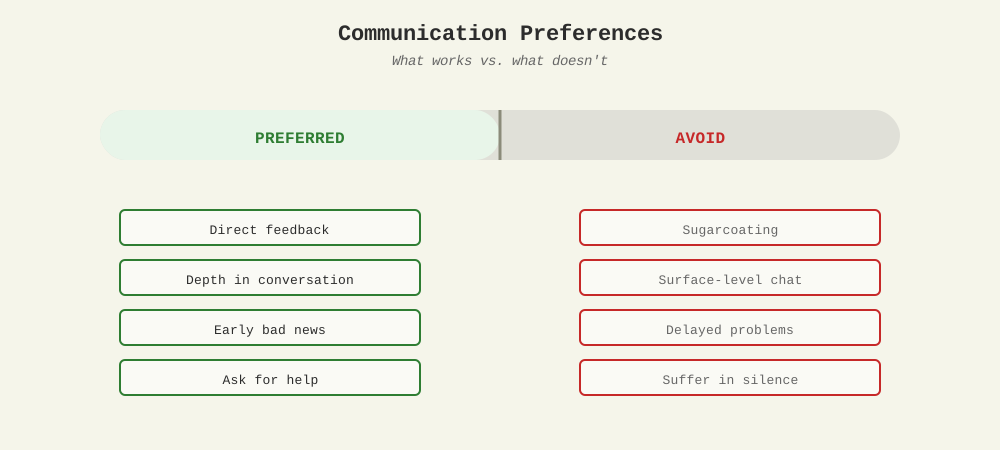
I value transparent, direct feedback and communication. Sugarcoating doesn't help either of us. If something isn't working, tell me. If you see a better path, say it.
I prefer depth in conversation. Surface-level updates don't teach us much. I want to understand the mechanics, the constraints, the trade-offs. Go deep.
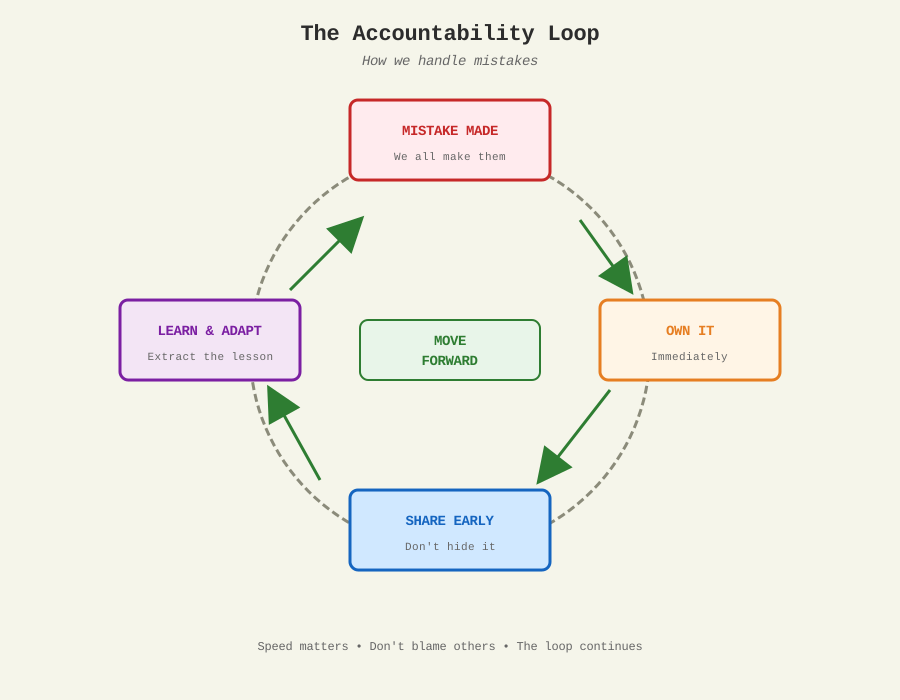
Share bad news early. I'd rather know about a problem today than discover it three weeks from now when our options have narrowed. Early awareness gives us room to adapt.
If you need help, ask. I don't micromanage. Silence means I'll assume you're clear on goals and expectations. If you're not, speak up.
I expect constructive feedback regularly. At least one piece per month. Direct feedback strengthens our partnership, not weakens it.
⸻
Work Values & Priorities
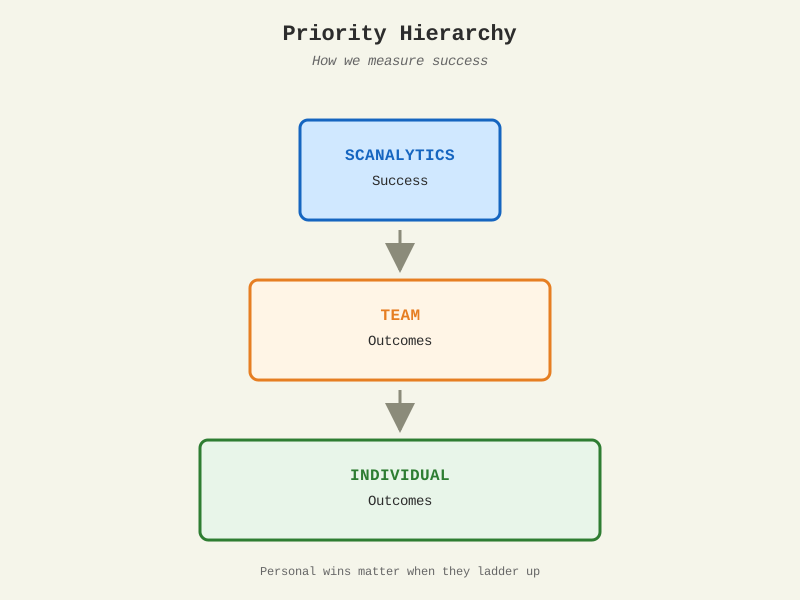
Success is measured by Scanalytics' outcomes, then your team's outcomes, then individual outcomes. This hierarchy isn't about diminishing individual contribution; it's about recognizing that our personal wins only matter if they ladder up to something bigger.
I value raw intelligence and relentless curiosity. The smartest people I know never stop asking "why" and "what if." They're intellectually restless in the best way.
Understanding the "why" matters as much as the outcome. Achieving a great result is worth 50% credit. If you can't explain why it worked, we can't repeat the win, which turns it into a future loss.
Unless faced with violating a law of physics, never assume something is being done the only way it can be done. Don't assume a problem can't be solved. "Expert" opinion and industry guidelines are often the worst things to follow. They codify what worked in the past, not what's possible in the future.
I believe internal conviction beats external consensus. If you're deeply convinced something is right based on rigorous thinking, don't abandon it just because others disagree. Consensus can be comforting, but it's often wrong. Strong beliefs, loosely held.
I believe in zeroth principle thinking. Not just first principles, but zeroth principles. Question the assumptions beneath the assumptions. Why does this problem exist at all? What would make it irrelevant? The best solutions often come from reframing the question entirely.
I don't believe in credentials. Degrees, titles, years of experience are weak signals. What matters is whether you can think clearly and learn quickly. Anything you need to know is a few select books, papers, or conversations away. Credentials signal past effort; capability signals future potential.
Activity is not a proxy for productivity. Being busy doesn't mean being effective. I care about outcomes, not hours logged or meetings attended. If you're spinning your wheels, stop and think. Sometimes the most productive thing you can do is pause and ask if you're solving the right problem.
Your mind is for having ideas, not holding them. Write things down. Capture decisions, context, and reasoning as you go. If it's only in your head, it doesn't exist for the team. Documentation isn't overhead; it's how we scale thinking beyond individuals.
Bias for action is non-negotiable. Action produces information. Information enables improvement. Inaction produces nothing. If you're 70% confident in a decision, move. Waiting for 100% certainty means you've waited too long. We learn faster by doing and iterating than by planning and deliberating. Imperfect action beats perfect planning every time.
⸻
The Scanalytics Build Framework
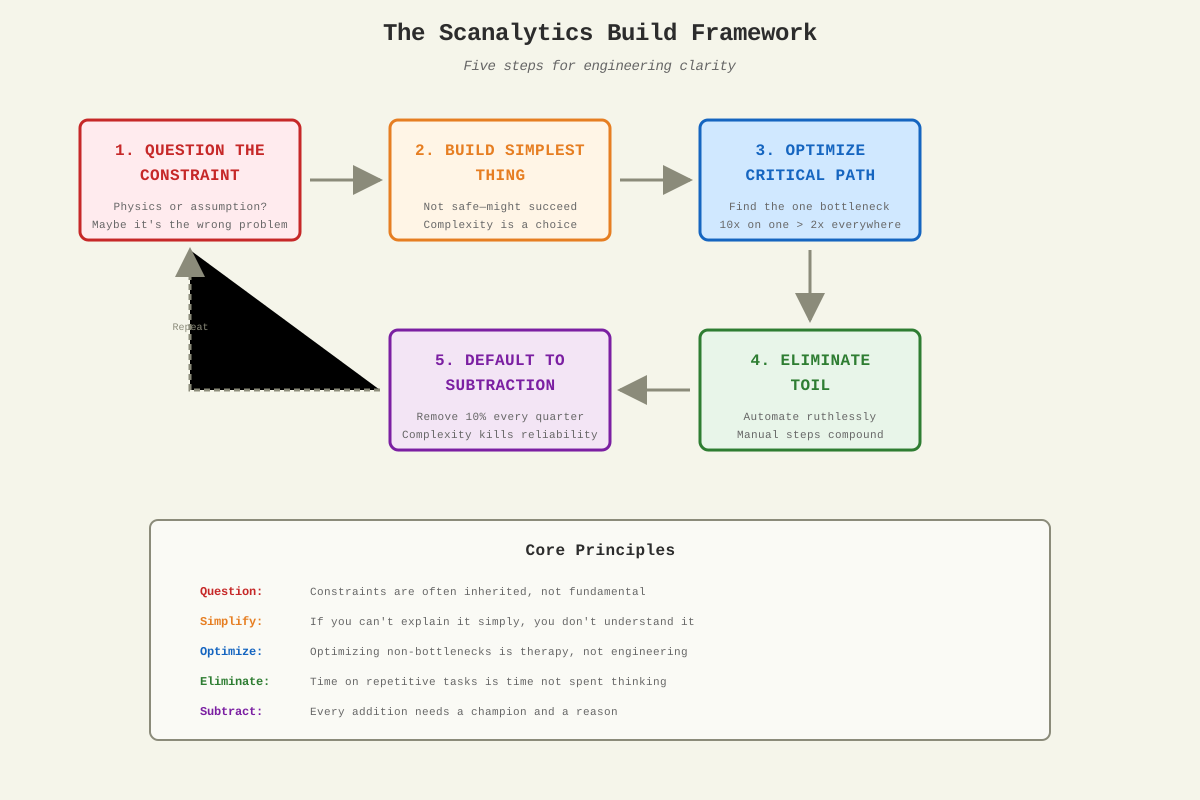
This is how we approach engineering problems at Scanalytics. It's not a process for process's sake; it's a forcing function for clarity.
1. Question the constraint
- Why does this limitation exist? Is it fundamental physics or inherited assumption?
- What would we build if this constraint didn't exist?
- Sometimes the constraint is the wrong problem.
2. Build the simplest thing that could work
- Not the simplest thing that feels safe, but the simplest thing that might succeed.
- Complexity is a choice. Choose it consciously or not at all.
- If you can't explain it simply, you don't understand the problem.
3. Optimize the critical path
- Identify the one bottleneck that limits everything else.
- 10x improvement on the critical path beats 2x improvement everywhere else.
- Optimizing non-bottlenecks is organizational therapy, not engineering.
4. Eliminate toil
- Manual steps compound. Automate ruthlessly.
- If humans are in the loop, make the loop 10x faster or remove the loop.
- Time spent on repetitive tasks is time not spent thinking.
5. Default to subtraction
- Every addition needs a champion and a reason.
- Every quarter, remove 10% of features/processes/steps.
- Complexity is the enemy of reliability.
⸻
Team Dynamics & Accountability
We're all on this bus together. Don't throw people under it. We succeed as a team, we fail as a team.
Admit mistakes quickly. We all make them. The faster you own it, the faster we can fix it. Don't hide. Don't blame others.
Speak your mind, especially when you hold a minority view. Dissent takes courage. I respect people who are willing to disagree thoughtfully, and I expect others to do the same when someone has the guts to voice an unpopular opinion.
✅ Do This
- Own mistakes immediately
- Voice dissenting opinions
- Ask for help when stuck
- Respect those who disagree
❌ Don't Do This
- Hide problems and hope they resolve
- Blame teammates when things go wrong
- Stay silent, then complain later
- Dismiss minority viewpoints
⸻
Leadership Expectations
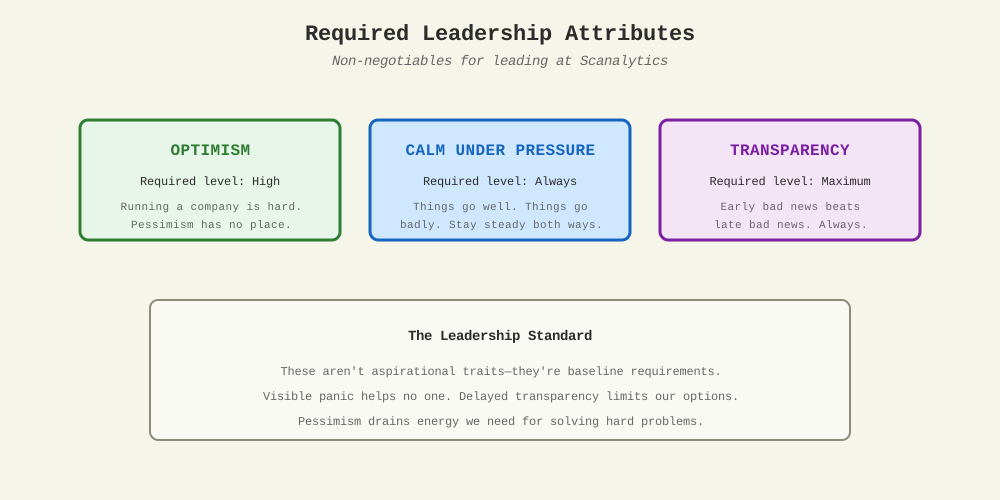
Optimism is required. Running a company is hard enough. There's plenty that's difficult without adding pessimism to the mix. Pessimism has no productive place here.
Demonstrate calm, optimistic leadership. Things will go well. Things will go badly. Both are part of the journey. Visible panic when the latter occurs does no good. Stay steady.
Bad news delivered early beats bad news discovered late. Always. The earlier I know, the more options we have.